From Passive to Active Learning in the Digital Age
23 October 2026
For years, the standard picture of education involved a student sitting quietly while information flowed in one direction: from teacher to learner. The digital age promised to shatter that model. Instead, in many classrooms and homes, it has quietly reinforced it. Students now sit in front of screens watching recorded lectures, clicking through slide decks, and skimming discussion posts. The tools changed. The fundamental dynamic often did not.
This is the central tension of modern education. Technology gives us unprecedented access to information, but access is not the same as understanding. Passive consumption feels productive because it is comfortable. Active learning feels harder because it demands something from the learner. The shift from one to the other is not a matter of buying better software or adopting the latest platform. It is a shift in how we design learning experiences, how we measure success, and how we think about the role of the student.
This article examines why passive learning persists despite decades of evidence against it, what active learning actually means in a digital context, and how educators, parents, and learners themselves can make the transition in ways that are practical rather than theoretical.

Why Passive Learning Survives in a Digital World
The persistence of passive learning is not a failure of intelligence. It is a predictable outcome of incentives.Passive formats scale easily. A single recorded lecture can reach ten thousand students. A worksheet can be auto-graded. A reading assignment requires no instructor time to deliver. From an administrative standpoint, passive learning is efficient. From a learner's standpoint, it is low-risk. You can sit through a video without exposing gaps in your understanding. Nobody sees you struggle.
There is also a psychological comfort in the illusion of progress. Watching a well-produced video on a complex topic creates a feeling of comprehension that often evaporates the moment you try to apply the idea. Researchers sometimes describe this as the fluency illusion: material feels easy to follow, so we assume we have mastered it. In reality, following an explanation and producing an explanation are entirely different cognitive tasks.
Digital platforms often amplify this illusion. Progress bars, completion badges, and streak counters reward time spent rather than understanding gained. A student can complete an entire online course without ever being asked to explain a concept in their own words, solve an unfamiliar problem, or defend a position. The system says "complete." The brain says "uncertain."
None of this means passive learning is worthless. A well-crafted lecture can introduce context, model expert thinking, and inspire curiosity. The problem arises when passive learning is the entire diet rather than one ingredient in a balanced approach.

What Active Learning Really Means
Active learning is not a single technique. It is a principle: learners construct understanding by doing something with information, not just receiving it.That "something" can take many forms. It might be explaining a concept to a peer, solving a problem without a worked example, predicting the outcome of an experiment before running it, writing a summary from memory, or debating a contested claim. What these activities share is that they force the learner to retrieve, reorganize, or apply knowledge. Each of those actions strengthens memory and reveals gaps.
In a digital context, active learning can look like:
- A student pausing a video to write down what they expect the next step to be, then checking.
- A discussion forum where learners must respond to a peer's argument with evidence rather than agreement.
- An interactive simulation where changing one variable produces a consequence the learner must explain.
- A collaborative document where each student annotates a shared text and defends their annotations.
Notice that none of these require expensive software. The digital age does not create active learning. It creates new surfaces on which active learning can happen, and new temptations to avoid it.

The Cognitive Case for Doing
The reason active learning works is rooted in how memory functions. Retrieval strengthens memory far more than rereading does. When you pull information out of your head, you reinforce the pathway to it. When you merely review information, you reinforce the feeling of familiarity without necessarily building durable access.This is why students who highlight textbooks often perform worse than students who close the book and try to recall the main points. The act of retrieval, even when it fails, signals to the brain that this information matters and needs to be consolidated.
Active learning also exposes misconceptions early. A student who watches a video on photosynthesis may believe they understand it. A student who tries to draw the process from memory quickly discovers which steps are fuzzy. That discovery is uncomfortable, but it is also the moment real learning begins. Passive formats rarely trigger this moment because they never ask the learner to produce anything.
There is a social dimension as well. Explaining an idea to another person forces you to organize it coherently. You cannot hide behind vague familiarity when someone asks a follow-up question. Digital tools can facilitate this kind of peer explanation through video calls, shared documents, or asynchronous voice notes, but only if the design of the course invites it.
Designing Digital Learning That Demands Engagement
The most common mistake in digital course design is treating interaction as an add-on. A discussion forum bolted onto a lecture series, a quiz at the end of a module, a optional live session that few attend. These gestures signal that activity is peripheral rather than central.Effective design inverts this. Activity becomes the spine of the course, and content becomes the support structure.
Start With a Task, Not a Topic
Instead of opening a module with a lecture on a concept, open with a problem that the concept solves. Give learners a scenario, a dataset, a flawed argument, or a design challenge. Let them struggle briefly. Then provide the content that helps them resolve the struggle. This sequence, sometimes called problem-first or inquiry-based design, creates a genuine need to know. Learners pay attention differently when they have already bumped into the limits of their understanding.This approach requires more upfront work from the designer. You cannot simply record a lecture and upload it. You must anticipate where learners will get stuck and build scaffolding that helps them move forward without removing the challenge entirely. That balance is delicate. Too little support and learners become frustrated. Too much and the task becomes a recipe to follow.
Make Retrieval a Routine, Not an Event
Low-stakes retrieval practice should happen constantly. Short quizzes, recall prompts, and "explain this in one sentence" exercises can be embedded throughout a digital course. The key word is low-stakes. If every retrieval attempt is graded heavily, learners will avoid the discomfort of not knowing. If retrieval is frequent and forgiving, it becomes a habit rather than a threat.Spaced repetition tools can support this, but they are not necessary. A simple practice of beginning each session with three questions about the previous session's material can accomplish much of the same goal.
Use Discussion With Intention
Discussion forums are among the most misused tools in online education. Too often they produce a wall of polite agreement that nobody reads. The fix is structure. Require learners to take a position, cite evidence, and respond to a specific counterargument. Assign roles such as skeptic, synthesizer, or applicator. Make the discussion feed into a later assignment so that participation has consequences beyond a grade.Asynchronous discussion has a real advantage over live conversation: learners have time to think before they write. That pause can produce more thoughtful contributions than a fast-moving seminar. But it also allows procrastination and shallow posting. Clear prompts and visible interdependence between participants reduce both risks.
Build in Reflection
Reflection is the bridge between doing and understanding. After an activity, ask learners to articulate what they did, what surprised them, and what they would do differently. This can be a short written response, a voice memo, or a structured journal. Reflection helps consolidate experience into transferable knowledge. Without it, activity can become busywork.Common Mistakes and Misconceptions
Misconception: Active Learning Means Group Work
Group work is one form of active learning, but it is not synonymous with it. A student working alone on a challenging problem, writing an explanation from memory, or revising a draft based on feedback is engaged in active learning. Collaboration can enrich the process, but it can also allow some learners to hide behind others. The criterion is not whether learners are together. It is whether each learner is doing the cognitive work.Mistake: Confusing Interaction With Engagement
Clicking a button, dragging an item, or answering a multiple-choice question can be interactive without being cognitively demanding. Many educational apps offer interactivity that feels modern but asks little of the learner. Before adopting a tool, ask a simple question: what does the learner have to think about to succeed here? If the answer is "very little," the interactivity is decoration.Mistake: Removing All Difficulty
Well-intentioned educators sometimes try to make digital learning frictionless. They provide summaries, worked examples, and step-by-step guides for everything. The result is a smooth experience with shallow learning. Productive difficulty, sometimes called desirable difficulty, is not a bug. It is the mechanism through which learning happens. The goal is not to eliminate struggle but to make sure the struggle is productive rather than arbitrary.Misconception: Passive Learning Has No Place
This is an overcorrection. Direct instruction, including lectures, has real value, especially for novice learners who lack the background knowledge to explore a topic independently. The problem is proportion and sequence. A lecture that prepares learners for an activity is different from a lecture that substitutes for one. The most effective digital courses blend explanation with application rather than choosing one over the other.
What Learners Can Do Without Waiting for Better Courses
Not every learner has control over course design. Students in traditional programs, employees in mandatory training, and self-directed learners using existing resources often face passive formats whether they like it or not. Fortunately, active learning can be imposed from the learner's side.Turn Consumption Into Production
After watching a video or reading a chapter, close the material and write a summary from memory. Then reopen the material and check what you missed. The gap between what you remembered and what you forgot is your study plan.Ask Questions the Material Does Not Answer
Passive materials rarely invite you to extend them. Do it anyway. What would happen if a variable changed? Where does this idea break down? Who might disagree with this claim, and why? Writing down these questions and attempting answers turns reading into thinking.Teach Someone Else
Explain what you are learning to a friend, a colleague, or even an imagined audience. The act of explanation exposes gaps that reading conceals. If no one is available, record a short voice note or write a brief explainer. The format matters less than the act of producing an explanation in your own words.Use Digital Tools as Thinking Partners, Not Answer Machines
Digital tools can support active learning or undermine it, depending on how they are used. A student who asks an AI system for an answer learns little. A student who asks for a counterargument to their own position, or who drafts an explanation and asks for critique, is using the tool to think more actively. The distinction is whether the tool replaces cognitive work or provokes it.The Role of Assessment in Shifting the Balance
Assessment drives behavior more than any syllabus statement. If exams reward recall of lecture content, learners will study passively. If assessments require application, synthesis, or explanation, learners will prepare differently.This is why changing assessment is often the most powerful lever for changing learning. A course that replaces a final multiple-choice exam with a portfolio of applied projects, a recorded explanation of a concept, or a structured debate will produce different study habits almost immediately. Learners are pragmatic. They study in the way the assessment demands.
The trade-off is workload. Assessing complex work is harder and slower than grading multiple-choice tests. This is a real constraint, especially in large courses. One compromise is to use automated or peer assessment for low-stakes retrieval and reserve instructor time for a smaller number of deeper assessments. Another is to assess process rather than only product, asking learners to submit reflections alongside their work.
A Note on Equity and Access
Active learning can raise equity concerns. Learners with less reliable internet, quieter home environments, or heavier work schedules may find synchronous activities and collaborative projects harder to manage. Digital active learning should be designed with flexibility in mind. Asynchronous options, low-bandwidth alternatives, and clear time expectations help ensure that the shift toward activity does not become another barrier.There is also a cultural dimension. Some learners arrive with expectations that education means listening and reproducing. Asking them to debate, critique, or co-create can feel uncomfortable at first. Naming that discomfort and explaining why the course is designed this way helps. Learners are more willing to try unfamiliar approaches when they understand the reasoning behind them.
Practical Steps for Educators Moving Online
For educators redesigning a course for digital delivery, a few concrete moves can shift the balance without requiring a complete overhaul.First, audit your current course for the ratio of consumption to production. Count the minutes learners spend watching or reading versus the minutes they spend explaining, solving, or creating. The exact ratio is less important than the awareness it creates.
Second, identify one lecture or reading that could be converted into a problem-first sequence. Start small. A single redesigned module can reveal what works with your learners before you commit to a larger change.
Third, build retrieval into the routine. Short, frequent, low-stakes checks are more effective than occasional high-stakes exams and easier to implement than they sound.
Fourth, make participation visible and consequential. If discussion or collaboration matters, connect it to later work. If it does not matter, consider removing it rather than leaving it as busywork.
Finally, ask learners for feedback on the design, not just the content. They can tell you which activities felt meaningful and which felt like hoops. That feedback is often more useful than any general survey about satisfaction.
The Bigger Picture
The digital age has not solved the problem of passive learning. In some ways, it has made the problem more convenient. It is easier than ever to feel educated without being changed by what you have encountered.But the same tools that enable passive consumption also enable something else. A learner can now find a community of practice, publish an explanation, run a simulation, receive feedback from a stranger on another continent, or build a portfolio of real work. The infrastructure for active learning exists. What remains is the decision to use it.
That decision belongs to educators who design courses, to institutions that set incentives, and to learners who choose how to spend their attention. The shift from passive to active is not a technological upgrade. It is a commitment to the idea that understanding is built, not received. Once that commitment is made, the digital age becomes not a distraction from learning but one of its most powerful enablers.
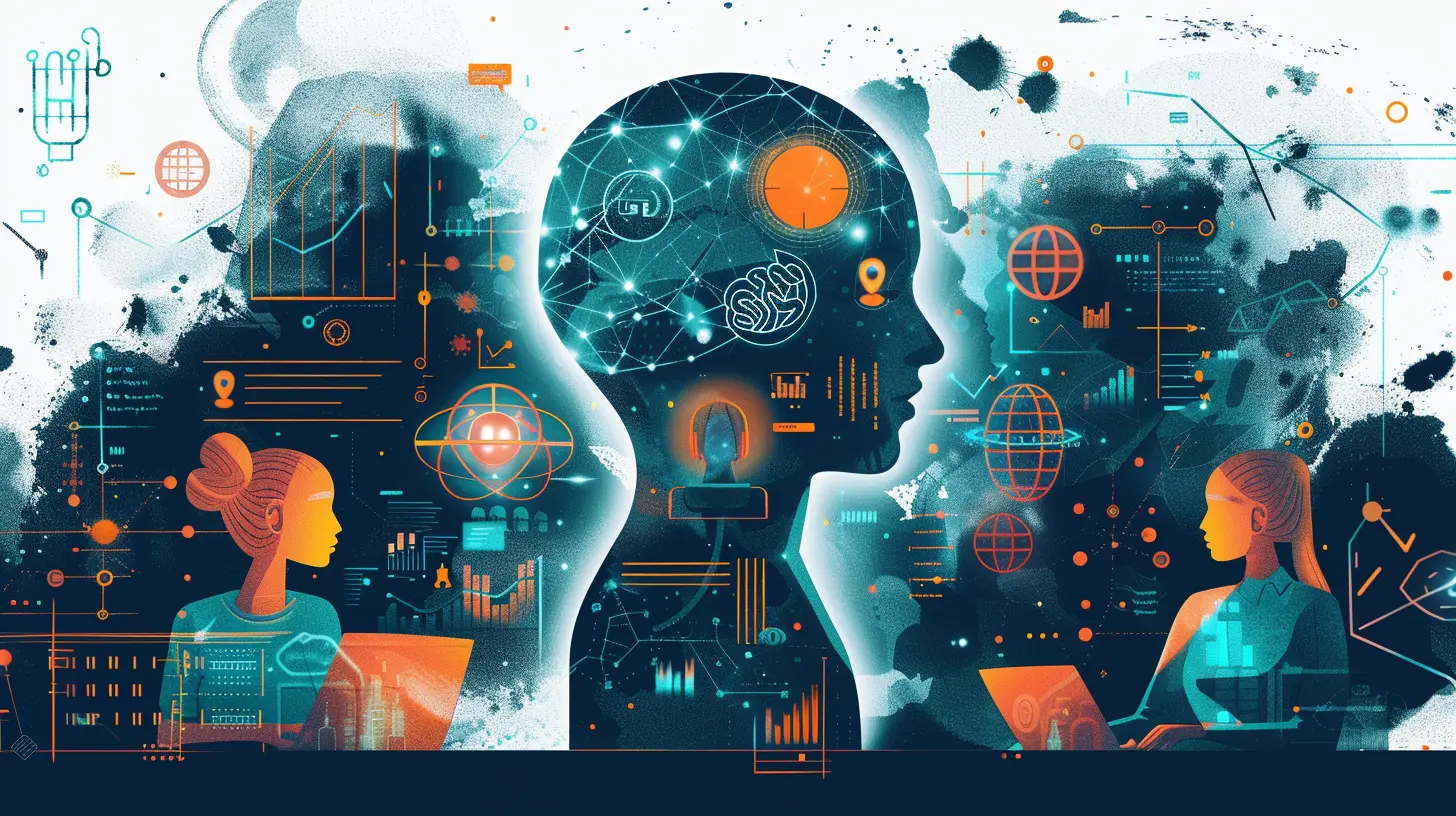
all images in this post were generated using AI tools
Category:
Self Directed LearningAuthor:

Anita Harmon
Discussion
rate this article
1 comments
Levi McQuiston
This article inspires us to embrace active learning and make education exciting and engaging!
October 23, 2026 at 3:30 AM