Will LMS Platforms Replace Traditional Classrooms by 2027?
27 April 2026
Let’s be honest—if you’d told me ten years ago that I’d be writing a blog post about whether a piece of software could replace the hallowed halls of a school, I’d have laughed. I mean, come on: a Learning Management System (LMS) versus the smell of chalk dust, the sound of a bell ringing, and the sight of a teacher scribbling on a whiteboard? It sounds like a sci-fi movie where robots take over detention duty.
But here we are, in 2025, and the question isn’t just a hypothetical. It’s a burning, almost obsessive curiosity for educators, parents, and students alike. Will LMS platforms—those digital hubs where you upload assignments, watch videos, and take quizzes—actually push traditional classrooms into extinction by 2027? Or is this just another tech hype bubble that’ll pop like a cheap balloon at a graduation party?
Grab a coffee (or tea, I don’t judge), and let’s dig into this rabbit hole together. I promise we’ll come out the other side with some answers—and maybe a few more questions.
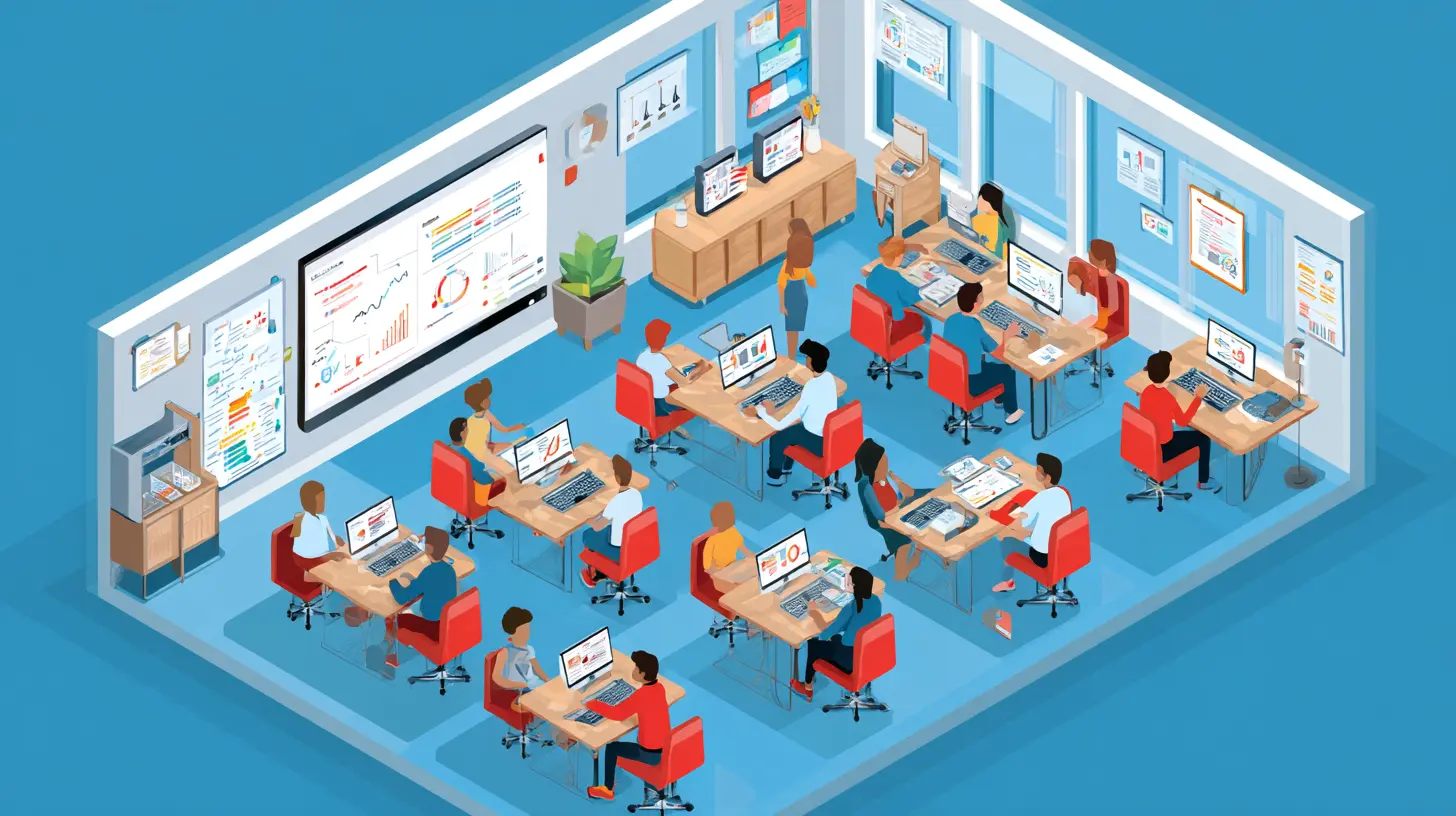
The Great Digital Migration: Why We’re Even Asking This
First, let’s set the stage. The pandemic was the ultimate stress test for education. Suddenly, millions of students were thrust into Zoom rooms, Google Classrooms, and Moodle dashboards. Teachers became overnight tech gurus, and parents turned into reluctant IT support. It was messy, chaotic, and honestly, kind of beautiful in a “we’re all in this together” way.But here’s the kicker: after the dust settled, many schools didn’t fully return to the old ways. Hybrid models stuck. LMS platforms became the backbone of coursework. And now, with AI tools like ChatGPT and adaptive learning algorithms getting scarily good, the question isn’t just “Can LMS replace classrooms?” It’s “Why shouldn’t they?”
Think of it like this: remember when Netflix killed Blockbuster? It wasn’t because Blockbuster was bad—it was because Netflix offered convenience, personalization, and zero late fees. Is education headed for a similar disruption? Or is the classroom more like a live concert—something you can’t replicate through a screen?

What Even Is an LMS (And Why Should You Care)?
Before we dive into predictions, let’s get on the same page. An LMS is basically the digital brain of a course. It’s where you log in to see your syllabus, submit homework, take tests, chat with classmates, and get feedback from your instructor. Think Canvas, Blackboard, Moodle, or the newer kids on the block like Teachable and Kajabi.But here’s the thing: modern LMS platforms are no longer just glorified file folders. They’re evolving into intelligent ecosystems. They can track your progress, suggest resources based on your weak spots, and even use AI to grade essays (scary, right?). Some, like Coursera’s platform, offer micro-credentials that employers actually recognize.
So, when we ask if they’ll replace classrooms, we’re really asking: can a digital environment replicate—or surpass—the social, emotional, and pedagogical magic of a physical room with a human teacher?

The Case for the LMS: Why It Might Win by 2027
Let’s play devil’s advocate first. There are some compelling reasons why LMS platforms could become the primary mode of education within two years.1. Personalization at Scale (The Holy Grail)
Traditional classrooms are one-size-fits-all. You sit in a row, listen to a lecture, and hope you keep up. But LMS platforms can adapt. Imagine a system that notices you’re struggling with algebra and automatically serves you a mini-lesson, a practice quiz, and a video from a different angle—all while your classmate moves ahead to calculus. That’s not science fiction; it’s already happening with platforms like Khan Academy and DreamBox.By 2027, AI-driven LMS could make “differentiated instruction” the norm, not a teacher’s pipe dream. And let’s be real: a machine can track thousands of data points per student per hour. No human teacher can do that without a supercomputer in their brain.
2. Cost and Accessibility (The Wallet Factor)
Let’s talk money. Building and maintaining a physical school is expensive—real estate, utilities, janitorial staff, security, and that one broken projector that never gets fixed. An LMS, on the other hand, scales almost infinitely. A school in rural India or a community college in the US can offer the same course for a fraction of the cost.Plus, LMS platforms are accessible 24/7. No snow days, no bus schedules, no “I missed the class because I had a dentist appointment.” For working adults, parents, or students with disabilities, this is a game-changer. By 2027, the economic pressure to cut costs might push many institutions to go fully digital.
3. Data-Driven Insights (The Creepy-but-Helpful Factor)
Teachers often rely on gut feelings: “I think Sarah is bored” or “John seems confused.” LMS platforms don’t guess. They know exactly how long you spent on a page, which questions you got wrong, and even where you paused a video. This data can be used to intervene early—before a student fails a test.In a traditional classroom, a quiet student can slip through the cracks. An LMS? It’s like having a hawk-eyed assistant that never blinks. By 2027, this could make education far more effective, but it also raises privacy concerns (more on that later).
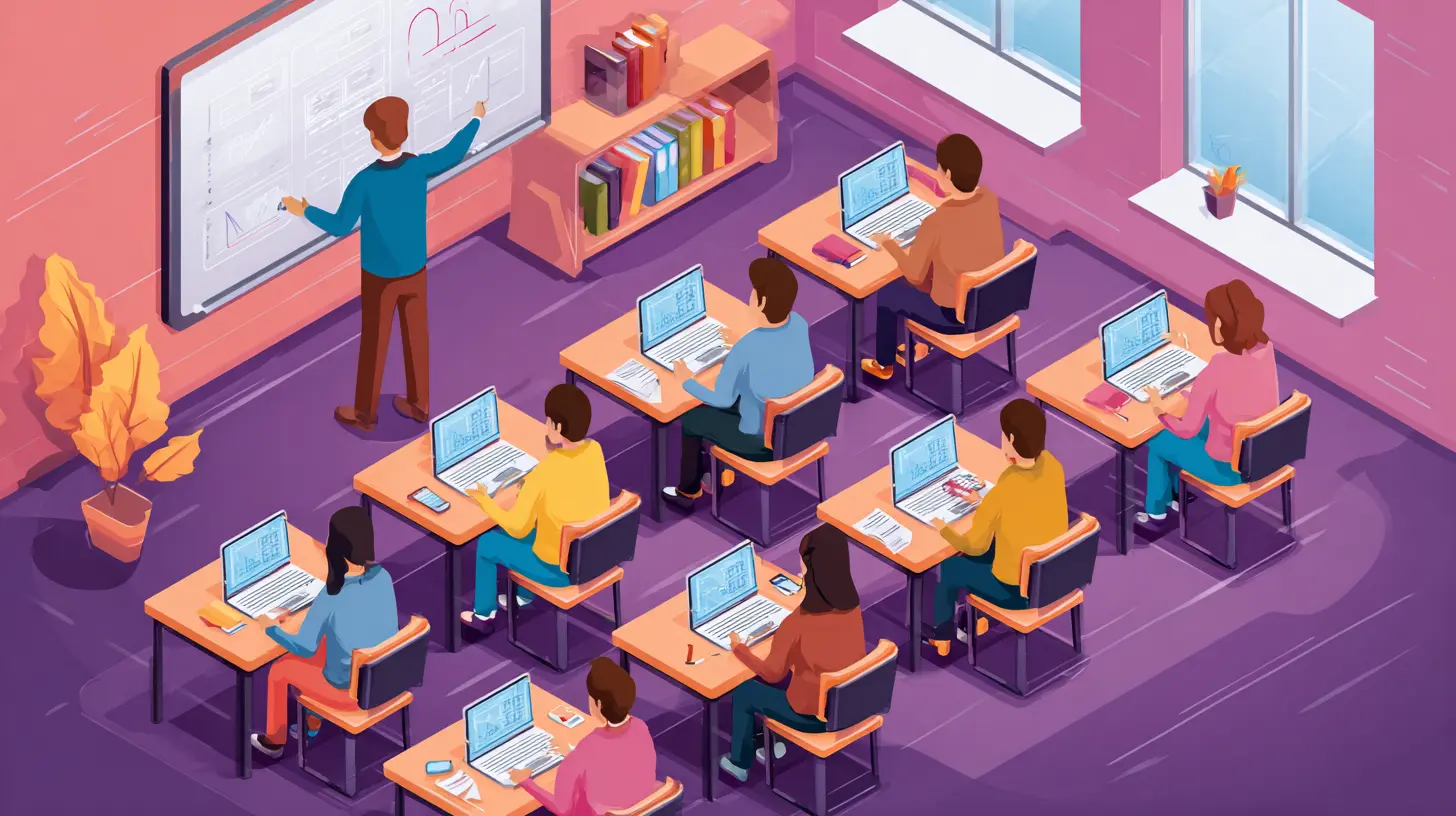
The Case for the Classroom: Why It’s Not Going Anywhere
Now, let’s pump the brakes. If you think a screen can replace the messy, beautiful chaos of a real classroom, you’ve probably never taught a kindergartner or watched a high school debate team. Here’s why traditional classrooms still hold the upper hand.1. The Social-Emotional Cocktail
Learning isn’t just about transferring information. It’s about connection. When a teacher sees a student’s eyes well up with tears, they can pause and ask, “Hey, are you okay?” When a group of kids works on a science project, they learn negotiation, compromise, and the joy of a shared “aha!” moment.An LMS can’t give you a high-five. It can’t read your body language. It can’t tell when you’re faking understanding to avoid embarrassment. And let’s be honest: even the best video call feels like talking to a fishbowl. The subtle cues—a smirk, a sigh, a raised eyebrow—are lost in translation.
By 2027, we might have VR classrooms that simulate presence, but will they ever replicate the warmth of a real handshake? I doubt it.
2. The Discipline and Structure Factor
Let’s face it: most of us are terrible at self-directed learning. It’s why gym memberships spike in January and fade by March. Traditional classrooms provide external structure—a bell schedule, a teacher who calls on you, a peer who whispers the answer. Without that, many students (especially younger ones) flounder.LMS platforms often require high levels of self-motivation. Sure, you can log in at 2 AM, but will you? By 2027, we might see a rise in “accountability bots” and gamification, but can a digital nudge replace the pressure of a real deadline? Probably not for everyone.
3. The Equity Problem (The Elephant in the Room)
Here’s the uncomfortable truth: not every student has a reliable internet connection, a quiet room, or a device that works. In the US alone, millions of students lack broadband access. Globally, the digital divide is a chasm, not a gap.If we move to LMS-only education by 2027, we risk leaving behind the most vulnerable students. Traditional classrooms, for all their flaws, are at least a level playing field—everyone shows up, sits in the same chair, and gets the same lesson. An LMS can’t fix poverty, and it can’t buy a kid a laptop.
The Hybrid Reality: What Will Actually Happen by 2027?
So, which side wins? Neither. And both. Here’s my prediction: by 2027, we won’t see a full replacement. Instead, we’ll see a messy, beautiful, and sometimes frustrating hybrid.Think of it like this: the LMS will become the engine of education, while the classroom will remain the chassis. The engine handles the heavy lifting—content delivery, assessment, data tracking, and personalization. The chassis provides the structure, the community, and the human touch.
What This Looks Like in Practice
- Flipped Classrooms 2.0: Students watch lectures on the LMS at home (at their own pace), then come to class for hands-on projects, debates, and one-on-one help from the teacher. This is already happening, but by 2027, it’ll be the default.- Micro-Credentials and Badges: Traditional diplomas might become less important as LMS platforms offer stackable, verifiable credentials. Employers could care more about your Coursera certificate than your high school GPA.
- AI Tutors as Co-Teachers: Imagine an LMS that acts as a 24/7 tutor—answering questions, explaining concepts, and even detecting when you’re about to give up. The teacher then focuses on higher-order skills: critical thinking, creativity, and emotional intelligence.
- Virtual Reality Field Trips: Instead of reading about the Colosseum, you’ll put on a headset and walk through it. But you’ll still need a real teacher to guide the discussion afterward.
The Elephant in the Room: Will Teachers Become Obsolete?
This is the question that keeps educators up at night. And I’ll be blunt: if you think an LMS can replace a great teacher, you’ve never had a great teacher. A machine can deliver content, but it can’t inspire. It can’t tell a story that makes a student’s eyes light up. It can’t say, “I believe in you,” in a way that actually means something.By 2027, teachers will likely shift from being “content deliverers” to “learning facilitators.” Their job will be less about lecturing and more about coaching, mentoring, and designing experiences. The LMS handles the boring stuff (grading, tracking, scheduling), freeing teachers to do what humans do best: connect.
The Risks Nobody’s Talking About
Let’s not sugarcoat this. The rapid rise of LMS platforms comes with serious downsides.1. Surveillance Overload
If an LMS tracks every click, pause, and wrong answer, who owns that data? Schools could use it to label students as “struggling” or “gifted,” creating self-fulfilling prophecies. Worse, companies could sell it to advertisers. By 2027, we’ll need ironclad privacy laws—or we’ll create a generation of students who feel watched 24/7.2. The Loneliness Epidemic
We’re already seeing rising rates of anxiety and depression among teens. Staring at a screen for six hours a day, with minimal human interaction, could make this worse. An LMS can’t replace the laughter in a cafeteria or the comfort of a friend’s shoulder.3. The Death of Serendipity
Some of the best learning happens by accident—a tangent in a lecture, a random comment from a classmate, a book you find in the library. LMS platforms are optimized for efficiency, not wonder. By 2027, we might have to deliberately design “digital serendipity” into these systems.
So, Will LMS Replace Traditional Classrooms by 2027?
The short answer? No. But they’ll transform them beyond recognition.Think of it like the transition from horse-drawn carriages to cars. Cars didn’t eliminate travel—they changed how we travel, where we live, and what we do. Similarly, LMS platforms won’t erase classrooms. They’ll force them to evolve.
By 2027, the most successful schools will be those that blend the best of both worlds: the efficiency and personalization of technology with the warmth and humanity of face-to-face interaction. The worst schools? They’ll be the ones that cling to the past or rush headlong into a digital dystopia.
A Final, Personal Thought
I’ll leave you with this: I write this article on a laptop, in a coffee shop, surrounded by strangers. But I’m also part of a community—of writers, readers, and thinkers. That’s the balance we need in education.The LMS is a tool, not a savior. The classroom is a sanctuary, not a relic. By 2027, both will coexist, and the real question isn’t “which one wins?” It’s “how do we use both to help every student thrive?”
So, what do you think? Are you ready for the hybrid future? Or are you holding onto your chalkboard with white-knuckled determination? Either way, the bell is about to ring—and it’s going to be a digital one.
all images in this post were generated using AI tools
Category:
Learning Management SystemsAuthor:

Anita Harmon
Discussion
rate this article
2 comments
Signe Sharpe
Sure, LMS platforms might take the spotlight, but nothing beats the magic of real human interaction. Technology can't replicate that classroom vibe—sorry, not sorry!
April 29, 2026 at 3:05 AM
Anita Harmon
Couldn't agree more. Technology is a powerful tool, but it will never replicate the spark of real-time human connection. By 2027, the best classrooms will blend both—not choose one over the other.
Daniella McVicar
Great article! Embracing LMS platforms can enhance learning experiences and provide flexibility. Traditional classrooms and technology can complement each other, creating a more dynamic education landscape!
April 28, 2026 at 2:50 AM
Anita Harmon
Thanks for the feedback! I agree that LMS platforms can really enhance learning and offer flexibility alongside traditional methods. It's an exciting time for education.