Transforming Teacher Training with Technology: A Vision for 2027
7 September 2026
The year 2027 is not a distant science fiction horizon. It is the equivalent of two academic calendars and one full budget cycle. For those of us who work in education, that timeframe is both urgent and full of possibility. Teacher training, the quiet engine of every classroom outcome, has for decades relied on a model that looks suspiciously like the one from 1997: a lecture hall, a slide deck, and a promise that classroom management will somehow click once you are in front of thirty students.
That model is cracking. Not because teachers are less capable, but because the students they will teach in 2027 are fundamentally different from those of even five years ago. They are fluent in feedback loops, personalized algorithms, and collaborative digital spaces. They do not see technology as a tool; they see it as an environment. If we train teachers using the old grammar of instruction, we are preparing them to speak a language that their students no longer use.
This article is not a prediction. It is a practical roadmap for a specific, achievable transformation. By 2027, teacher training can move from a one-time event to a continuous, adaptive, and deeply human process. The technology to do this exists today. What is missing is a coherent vision and the courage to make structural changes.
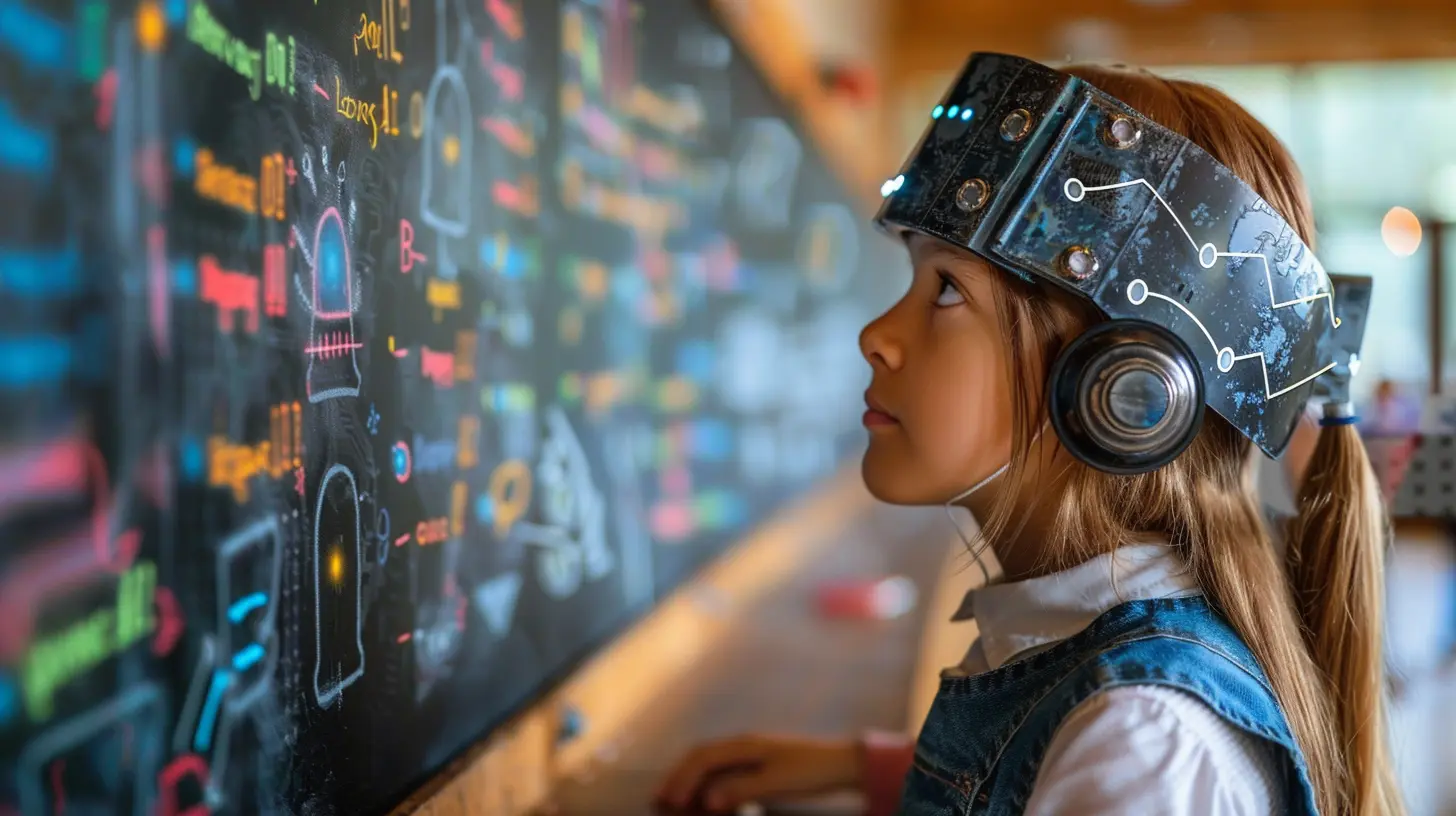
The Core Problem: Training as a Ticket, Not a Journey
Most teacher preparation programs operate on a "ticket to ride" model. You complete your coursework, you pass your practicum, you get your certificate, and you are considered "trained." Professional development after that is often a series of disconnected workshops, mandated by the district, delivered in a conference room, and forgotten by the following Monday.This model has three fatal flaws.
First, it assumes that teaching competence is a destination. In reality, teaching is a performance art that decays without practice and feedback. A teacher who was excellent in 2023 will not necessarily be excellent in 2027 if they have not evolved their methods, updated their content knowledge, or refined their ability to manage a classroom that now includes AI-assisted learning tools.
Second, the model ignores the variance in teacher readiness. Some new teachers have deep content knowledge but struggle with pacing. Others have natural rapport with students but cannot design a coherent unit. A one-size-fits-all training program treats these different starting points as if they were identical. It is the educational equivalent of giving every patient the same dose of the same medicine regardless of their diagnosis.
Third, the traditional model separates theory from practice in a way that is neurologically inefficient. A teacher learns about cognitive load theory in a lecture, then tries to apply it six weeks later in a practicum. By that time, the context has changed, the students are different, and the theoretical knowledge has faded into a vague memory. The brain learns best when information is immediately applied, tested, and corrected in a real or simulated environment.
Technology can solve all three problems, but only if we stop using it as a digital photocopier. Putting a lecture online does not make it modern. Giving teachers a tablet does not make them tech-savvy. The transformation we need is not about the devices. It is about the architecture of the learning experience.
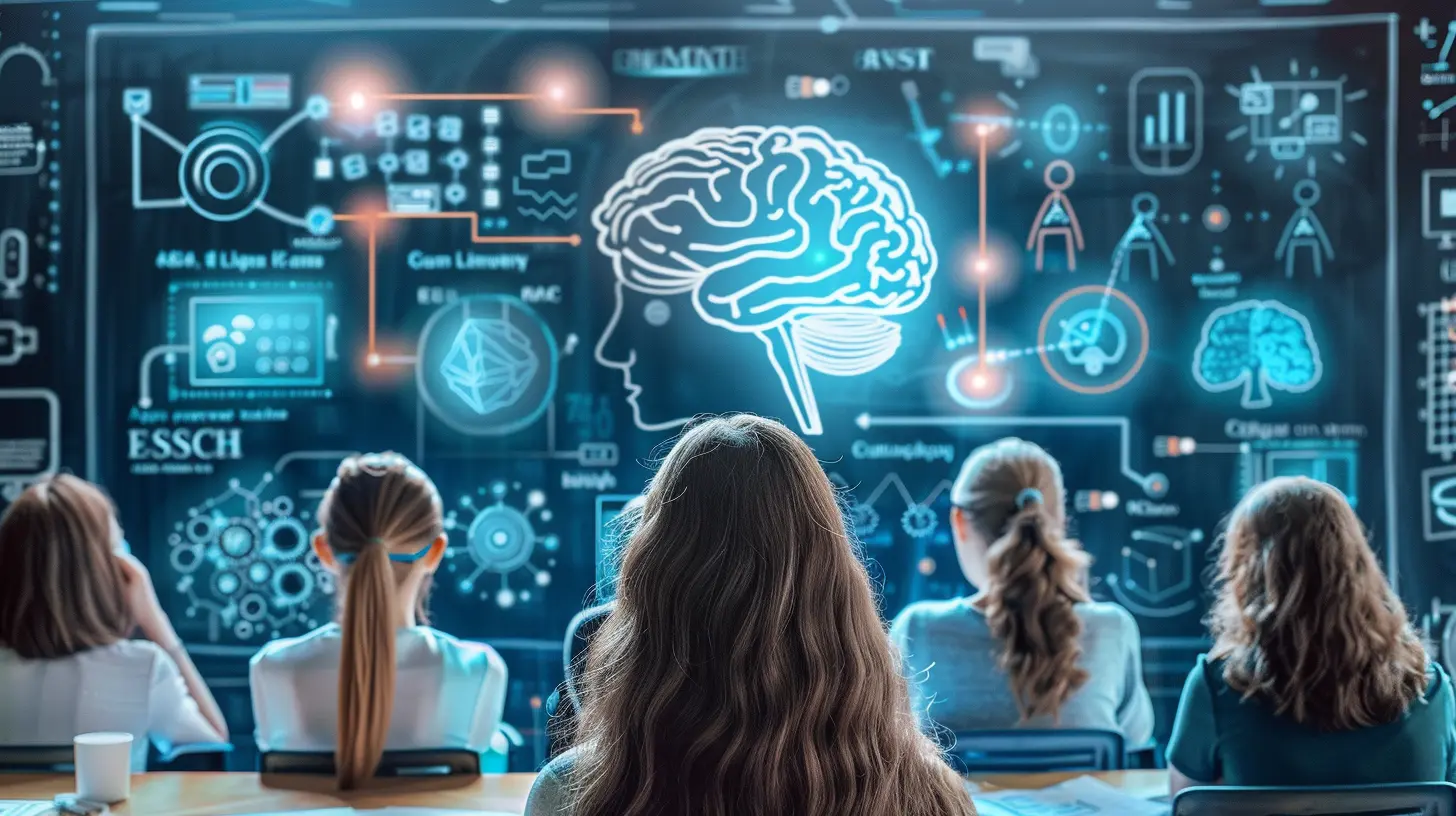
Micro-Credentials and the End of the One-Time Certification
By 2027, the most forward-thinking training programs will have abandoned the idea of a permanent teaching license as the sole gatekeeper. Instead, they will use a stackable system of micro-credentials that are specific, observable, and tied to classroom outcomes.A micro-credential is not a course. It is a demonstrated competency. For example, instead of taking a three-credit course in "Educational Technology," a teacher would earn a micro-credential in "Designing Collaborative Online Discussions That Prevent Off-Topic Drift." To earn it, they would need to submit a video of themselves facilitating such a discussion, include student work samples that show evidence of learning, and pass a short oral assessment with a master teacher.
The advantage here is granularity. A teacher who is brilliant at explaining historical context but weak at using data to differentiate instruction can focus their professional development precisely where the gap exists. This saves time, money, and emotional energy. It also creates a culture of continuous improvement, because a micro-credential is not permanent. It can expire after three years, requiring renewal with new evidence.
There is a trade-off, however. Micro-credential systems are only as good as their assessment rubrics. If the rubric is vague, the credential becomes meaningless paperwork. If the assessment is done by the same people who taught the teacher, it becomes a conflict of interest. The solution is to use a mix of automated analytics and human judgment. For example, an AI coach can analyze a teacher's video for how many times they ask open-ended questions versus closed ones. That is objective data. A human mentor then watches the same video to assess the quality of the questions, which is subjective and contextual.
The common mistake here is to think that micro-credentials are just smaller courses. They are not. They are evidence-based certifications that require a portfolio. This is a heavier lift for the teacher, but the payoff is that the credential actually means something to an employer.

The Role of AI Coaches in Daily Practice
The most transformative technology for teacher training is not virtual reality. It is the AI coach that lives inside the teacher's daily workflow.Imagine a first-year teacher named Sarah. She teaches middle school science. After her third-period class, she opens her laptop and sees a dashboard. The AI has analyzed the audio from her classroom (with consent and anonymization). It tells her that she spoke for 78 percent of the class period. It notes that she asked 14 questions, but only three were higher-order thinking questions. It also flags that two students in the back row were disengaged for the last 15 minutes, based on their lack of participation in the polling app she uses.
This is not a surveillance tool. It is a coaching tool. Sarah chooses to share this data with her mentor, who is a veteran teacher at another school. The mentor reviews the same dashboard, then they have a 20-minute video call. The mentor says, "I see you are rushing the inquiry phase. You are giving the answer before the students have time to struggle. What if you wait eight seconds after asking a question before you say anything else?"
The AI does not replace the mentor. It makes the mentor more effective by giving them high-resolution data. Without the AI, the mentor would have to observe Sarah for an hour, take notes, and then try to recall specific moments. With the AI, they are both looking at the same evidence, discussing patterns, and setting specific goals for the next day.
This is the shift from "professional development as an event" to "professional development as a daily habit." Research in expertise acquisition has long shown that deliberate practice with immediate feedback is the only path to mastery. In sports and music, this is obvious. A pianist does not attend a workshop twice a year. They practice daily with a coach listening. Why should teaching be any different?
The misconception is that AI coaching will be cold and robotic. In practice, the best implementations are the opposite. The AI handles the tedious work of counting talk time and categorizing question types. That frees the human mentor to focus on the emotional and relational aspects of teaching, which are the hardest to codify.
There is a real risk of over-reliance on analytics. A teacher might start optimizing for the metrics (talking less, asking more questions) without paying attention to whether the students are actually learning. This is the classic Goodhart's Law problem: when a measure becomes a target, it ceases to be a good measure. To mitigate this, the AI coach should never give a single "score." Instead, it should provide descriptive patterns and leave the judgment to the human pair.

Simulated Classrooms and the Safe Space to Fail
One of the most underutilized technologies in teacher training is the high-fidelity simulation. Not the clunky virtual reality headsets that make people nauseous, but the kind of scenario-based software that airlines have used for decades to train pilots.In a flight simulator, a pilot can experience an engine failure without crashing a plane full of passengers. In a teaching simulator, a trainee can experience a student meltdown, a parent confrontation, or a sudden curriculum change without harming real children.
By 2027, these simulations will be sophisticated enough to include avatars with realistic emotional responses. A trainee might practice de-escalating a student who is refusing to do work. The avatar student might say, "This is stupid. I am never going to use this in real life." The trainee must respond in a way that acknowledges the student's frustration while maintaining the learning goal. The simulation can be paused, rewound, and replayed with different strategies.
The value here is the removal of consequence. In a real classroom, a new teacher who tries a risky engagement strategy and fails will spend the rest of the period trying to regain control. The students will remember that failure. The teacher will internalize it as a personal deficiency. In a simulation, the failure is costless. The teacher can try the aggressive strategy, see it backfire, and then try the empathetic strategy and see it work. That experiential learning is far more durable than reading about it in a textbook.
But simulations have their critics. Some argue that they are artificial, and that real teaching is too messy to be modeled. This is a valid point. A simulation cannot capture the exhaustion of Friday afternoon, the smell of a cafeteria, or the unpredictable energy of a class that has just had a fire drill. The best use of simulations is not to replace real practice but to precede it. A trainee should go through the simulation first, making their novice mistakes in a safe space, so that when they enter a real classroom they are already past the most basic errors.
Another critique is cost. High-quality simulations are expensive to build and require significant computing power. However, by 2027, the cost of rendering realistic avatars will have dropped dramatically, just as the cost of video conferencing dropped in the 2010s. The barrier is no longer technical. It is the willingness of training programs to invest in the development of scenarios that are aligned with their curriculum.
The best practice is to use a blended model. Trainees spend 20 percent of their practice time in simulations, 30 percent in co-teaching with a mentor, and 50 percent in solo teaching with an AI coach providing feedback. This mix gives them the safety of simulation, the modeling of a master, and the authenticity of real responsibility.
The Data Privacy Tightrope
Any discussion of technology in education must eventually confront the elephant in the room: data privacy. When an AI coach records a teacher's classroom audio and analyzes their speech patterns, that is sensitive information. When a simulation records a trainee's responses to a distressed avatar, that is also sensitive.The temptation for school districts and training programs is to collect as much data as possible to make better decisions. This is a mistake. The moment teachers feel that their professional development data can be used against them in a performance review or a layoff decision, they will game the system. They will speak less to game the talk-time metric, or they will choose the "safe" response in a simulation instead of the experimental one.
The principles for ethical data use in teacher training should be clear by 2027. First, data must be owned by the teacher, not the institution. The teacher decides who can see it and for how long. Second, data used for formative coaching must be completely separate from data used for summative evaluation. If these two streams mix, trust evaporates. Third, teachers must be able to delete their data at any time, just as they would be able to throw away a notebook of private reflections.
The trade-off is that without longitudinal data, researchers cannot easily determine which training methods produce the best outcomes. This is a real loss. But it is a loss we must accept to preserve the psychological safety that makes honest practice possible. A teacher who is constantly looking over their shoulder is not going to try a new questioning technique. They are going to play it safe, and safe is not always effective.
Collaboration Across Institutions
No single school or university has the resources to build all of these systems alone. The vision for 2027 depends on partnerships. A university might develop the theoretical framework and the assessment rubrics. A technology company might build the AI coach and the simulation engine. A consortium of school districts might provide the anonymized classroom data needed to train the AI models.These partnerships are difficult. They require different organizational cultures to align on goals and timelines. Universities move slowly and value publication. Tech companies move fast and value product launches. School districts are under immediate pressure to improve test scores and value practical results.
The common mistake is to let the technology company drive the entire agenda. This leads to tools that are flashy but not pedagogically sound. The better model is a "co-design" approach, where teachers are involved from the very first design meeting. They are not just testers of the final product. They are co-creators of the scenarios, the rubrics, and the feedback protocols.
There is also a role for the public sector. State education agencies can create standards for what a micro-credential must include, so that a credential earned in Ohio is recognized in California. They can also fund the initial development of open-source simulation scenarios that can be shared across districts, reducing the cost for everyone.
What This Means for the Teacher in the Trenches
If you are a current teacher or a teacher educator, reading this and feeling overwhelmed is a normal reaction. The vision for 2027 is ambitious. But the path forward does not require you to become a software engineer. It requires you to become a more intentional consumer of the tools that are already emerging.Start small. Pick one class period a week where you record yourself and use a simple AI transcription tool to analyze your talk time. Share the transcript with a trusted colleague and ask them to give you one piece of feedback. That is the seed of the AI coach model.
Advocate for your own professional development to be more granular. Instead of sitting through another generic workshop on "differentiation," ask your administrator if you can instead spend that time building a portfolio of evidence for a specific micro-credential in differentiation for English language learners.
Be honest about your fears. If you are worried that an AI coach will expose your weaknesses, remember that your weaknesses are already visible to your students. They know when you are struggling. The difference is that a coach can help you improve, while your students can only suffer in silence.
The vision for 2027 is not about making teachers obsolete. It is about making teachers better than they ever thought possible. The technology is not the magic. The magic is the human relationship between a dedicated teacher and a skilled mentor. Technology simply removes the barriers of time, distance, and memory that have always limited that relationship.
The classroom of 2027 will be a place where teachers are learners first. They will model curiosity, resilience, and the willingness to try new things. That is the ultimate lesson for their students. If we can transform teacher training into a continuous, technology-enhanced, deeply human practice, we will not just improve test scores. We will change the culture of education itself.
The tools are ready. The question is whether we are ready to use them with wisdom, courage, and a relentless focus on the human beings at the center of it all.
all images in this post were generated using AI tools
Category:
Educational TechnologyAuthor:

Anita Harmon
Discussion
rate this article
2 comments
Otto Estes
This article is a breath of fresh air! Embracing technology in teacher training opens up exciting possibilities for educators and students alike. I can't wait to see how this vision unfolds by 2027!
October 1, 2026 at 4:22 AM
Astoria Harmon
This article presents a thoughtful vision for teacher training in 2027. Embracing technology's potential will empower educators and enhance learning experiences, ultimately benefiting students in meaningful ways. Great insights!
September 14, 2026 at 4:13 AM
Anita Harmon
Thank you for your kind words! I'm glad you found the insights valuable. It's exciting to think about how technology can reshape teacher training.