Rethinking Curriculum Through a Multicultural Lens
14 October 2026
Curriculum is never neutral. Every choice about what to teach, what to leave out, whose voices get centered, and whose stories remain at the margins sends a message to students about what counts as knowledge and who counts as a knower. A multicultural lens does not simply add a few diverse names to a reading list. It asks harder questions about the structure of knowledge itself, the purposes of schooling, and the relationship between what happens in a classroom and the society that classroom serves.
This article is for curriculum leaders, department heads, teacher educators, and classroom teachers who want to move past surface-level diversity efforts and build something more durable. It covers the conceptual foundations, the practical design moves, the common pitfalls, and the trade-offs that come with rethinking curriculum through a multicultural lens. The goal is not to hand you a checklist. It is to give you a way of thinking that you can apply to your own context, whether you work in a primary school, a secondary humanities department, a STEM program, or a university faculty.

What a Multicultural Lens Actually Means
A multicultural lens is a way of examining curriculum that treats cultural diversity as a fundamental feature of knowledge rather than a decorative addition. It assumes that disciplines themselves carry histories, assumptions, and blind spots shaped by the cultures that produced them. When you look at a mathematics curriculum through this lens, you do not just ask whether students from different backgrounds can access the content. You also ask how mathematical knowledge developed across civilizations, whose contributions were recorded and whose were erased, and how the framing of problems reflects particular cultural assumptions about what mathematics is for.This is different from what many schools call multicultural education. In practice, that term often refers to celebrating heritage months, adding food and festivals to the calendar, or including a handful of texts by authors from underrepresented groups. Those gestures have value, but they rarely change the underlying curriculum. A multicultural lens goes deeper. It interrogates the selection of content, the sequence of learning, the assessment methods, the examples used, and the implicit norms about what good thinking looks like.
There are three levels at which this work happens. The first is representation: who appears in the curriculum and how. The second is perspective: whose viewpoints shape how a topic is framed. The third is epistemology: what counts as valid knowledge and how knowledge is produced. Most schools stop at the first level. Genuine rethinking requires attention to all three.

Why the Traditional Curriculum Feels Incomplete
Traditional curricula in many English-speaking countries were built during specific historical periods with specific assumptions. They tended to treat Western European thought as the universal standard and everything else as regional, ethnic, or supplementary. This was not always a conscious conspiracy. It was often the result of who had the power to design curricula, which texts were available, and which scholarly traditions were considered authoritative.The result is a curriculum that can feel incomplete to students whose histories and communities are absent or misrepresented. It also limits students from dominant groups, who may graduate without understanding how much of what they take as universal is actually particular. A student who studies the scientific revolution without learning about contributions from the Islamic world, or who studies democracy without engaging with non-Western political traditions, has a narrower education than they might assume.
Critics sometimes argue that this framing is about guilt or ideology. That misses the point. The argument is educational: a curriculum that excludes or distorts large parts of human experience is simply less accurate and less useful. It fails on its own terms as a preparation for understanding the world.
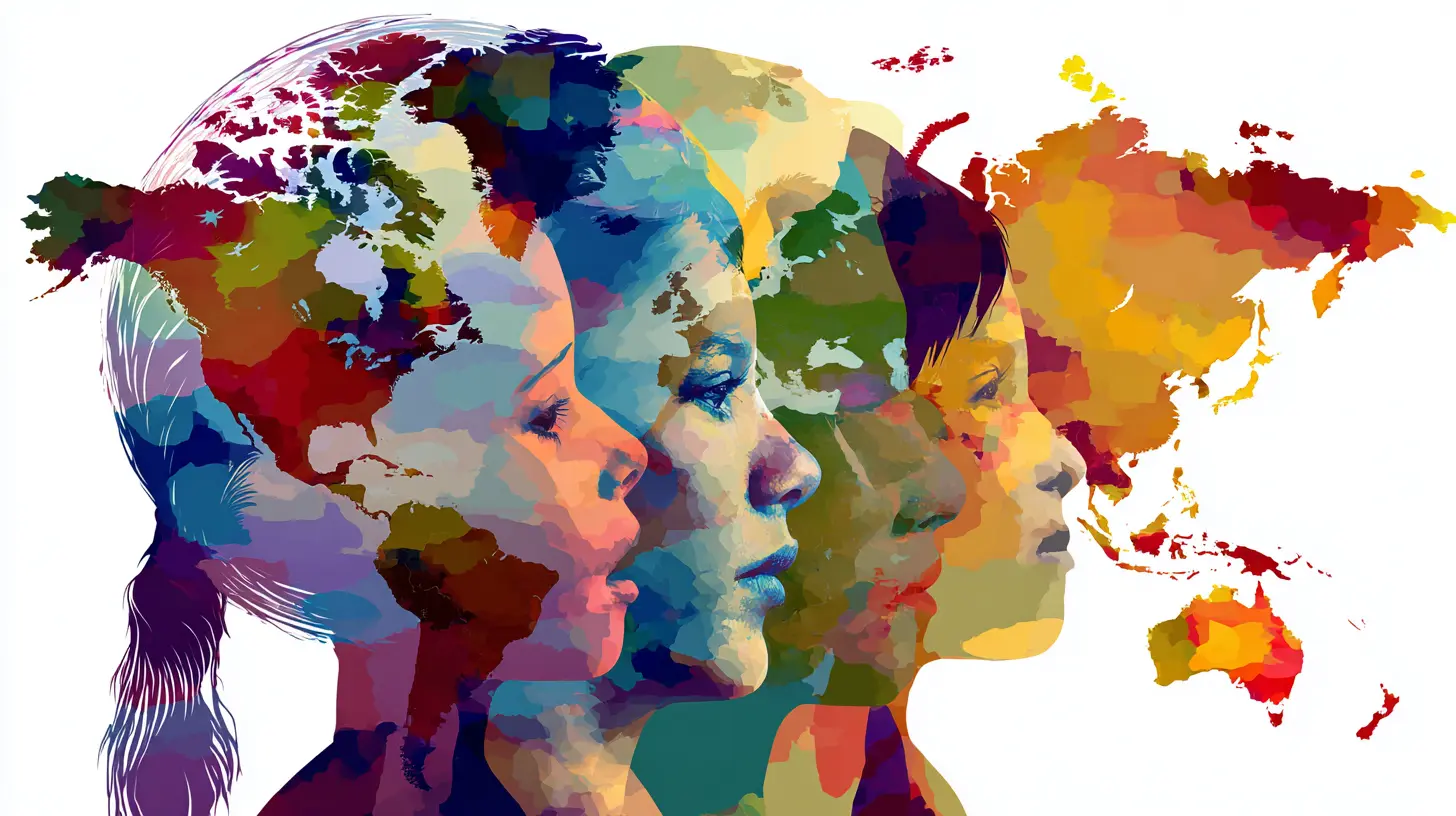
Core Principles of Multicultural Curriculum Design
Before getting into practical steps, it helps to name the principles that guide this work. These are not rules so much as orientations.Knowledge Is Situated
All knowledge emerges from particular times, places, and communities. Recognizing this does not mean abandoning standards of evidence or rigor. It means being honest about the conditions under which knowledge was produced. When students understand that a theory or method came from a specific context, they can evaluate it more thoughtfully rather than treating it as timeless truth.Multiple Perspectives Strengthen Understanding
A single perspective, however well developed, is a partial view. When students encounter a historical event through more than one lens, they develop a more textured understanding. This is not relativism. It is the recognition that complex events rarely have one clean interpretation, and that comparing accounts is a core intellectual skill.Identity Matters for Learning
Students learn better when they see themselves in the curriculum and when their cultural backgrounds are treated as resources rather than deficits. This is supported by a broad body of research in educational psychology, though the specific mechanisms and effects vary by context. The practical implication is that representation is not just about fairness. It is about engagement and comprehension.Curriculum Is a Site of Power
Decisions about curriculum allocate attention, legitimacy, and resources. Recognizing this helps educators make deliberate choices rather than defaulting to tradition. It also means that changing curriculum often involves navigating institutional interests, which is why the work requires both vision and political skill.
Moving From Add-Ons to Structural Change
The most common mistake in multicultural curriculum reform is treating it as an add-on. A unit on Diwali here, a poster of a Black scientist there. These gestures can be meaningful, but they leave the core intact and often feel performative to students.Structural change means rethinking the sequence, the required texts, the assessment tasks, and the framing questions. It might mean replacing a survey course that moves chronologically through European history with one organized around themes like migration, trade, or empire, allowing multiple regions to be studied in relation. It might mean redesigning a science unit so that students investigate a local environmental issue alongside the standard content, connecting abstract concepts to community knowledge.
The shift from add-on to structural change usually happens in stages. A useful way to think about it:
1. Inclusion: Adding content about underrepresented groups to existing structures.
2. Integration: Reworking units so that multiple perspectives are built into the framing.
3. Transformation: Redesigning courses around questions that require comparative and cross-cultural thinking.
4. Action: Engaging students in applying what they learn to real issues in their communities.
Most schools operate at stage one or two. Moving to stage three requires sustained professional development, time, and leadership support.
Practical Steps for Redesigning a Unit
If you are a teacher or curriculum leader who wants to start, here is a process that works at the unit level.Step 1: Audit the Current Unit
List the texts, examples, names, and perspectives included. Note who is represented and who is not. Note whose questions drive the inquiry. Be honest about gaps. This audit is not about shame. It is about clarity.Step 2: Identify the Big Ideas
What are the enduring understandings you want students to leave with? These should be broad enough to support multiple cultural perspectives. For example, "Conflict arises from competing interests and identities" is a big idea that can be explored through many historical and contemporary cases.Step 3: Choose Anchor Cases From Multiple Contexts
Select two or three cases that illuminate the big idea from different cultural and geographic contexts. Avoid tokenism. Each case should be studied in depth, not just mentioned. Depth matters more than coverage.Step 4: Design Questions That Require Comparison
Good questions push students to analyze similarities and differences without flattening them. "How did different societies respond to industrialization, and what shaped those responses?" is stronger than "What was the Industrial Revolution?"Step 5: Rethink Assessment
Traditional assessments often reward recall of a single narrative. Multicultural assessments might ask students to compare sources, construct arguments from multiple perspectives, or apply concepts to unfamiliar contexts. This is more demanding, not less.Step 6: Gather Feedback and Revise
Pilot the unit, collect student work, and ask colleagues to review it. Curriculum redesign is iterative. Expect to revise after the first run.
Subject-Specific Considerations
Different disciplines raise different issues. A few examples illustrate the range.History and Social Studies
History is the most obvious site for multicultural curriculum work, but also the most contested. The key move is to treat history as interpretation rather than a single story. Include primary sources from multiple groups. Study how historical narratives are constructed and why they differ. Avoid the trap of presenting a "balanced" view that treats all claims as equally valid regardless of evidence.Literature and Language Arts
Canon debates are perennial. A multicultural lens does not require abandoning classic texts. It requires situating them. Pair a canonical novel with texts from other traditions that address similar themes. Teach students to notice whose language and experience is treated as universal and whose is marked as particular.Science and Mathematics
These subjects are sometimes assumed to be culture-free. They are not. The questions scientists choose to investigate, the applications they prioritize, and the ways findings are communicated all reflect cultural and economic contexts. Including the history of contributions from diverse civilizations is valuable, but so is examining how scientific work affects different communities differently.Arts and Music
Arts curricula often already include some diversity, but it can be superficial. Go beyond exposure to study the cultural contexts, functions, and meanings of artistic traditions. Invite students to create work that engages with multiple traditions rather than simply copying them.Common Mistakes and Misconceptions
Several pitfalls recur in multicultural curriculum work. Naming them can help you avoid them.Tokenism. Adding one diverse figure or text without changing the surrounding structure. Students notice this, and it can do more harm than good.
Essentialism. Treating cultures as monolithic and static. "African culture" or "Asian values" are not meaningful categories. Specificity matters.
Superficial celebration. Focusing on food, festivals, and heroes while avoiding harder questions about power, conflict, and inequality.
Deficit framing. Presenting marginalized groups primarily through the lens of struggle or victimhood. This can be accurate in part, but it is not the whole story. Include agency, creativity, and achievement.
Relativism. Treating all perspectives as equally valid regardless of evidence. A multicultural lens is not an excuse to abandon rigor. It is a call to apply rigor more broadly.
Speed. Trying to overhaul everything at once. Sustainable change is incremental and requires buy-in.
Trade-Offs and Tensions
Honest curriculum work involves trade-offs. Pretending otherwise leads to shallow solutions.Depth versus coverage. Including more perspectives takes time. Something has to give. The usual answer is to reduce coverage and go deeper, but that decision has consequences for standardized assessments and prerequisite knowledge.
Representation versus rigor. Some worry that including underrepresented voices means lowering standards. In practice, the opposite is often true. Studying multiple perspectives requires more sophisticated analysis, not less.
Local versus global. A curriculum that includes global perspectives may neglect local community knowledge. The best approaches do both, connecting global themes to local contexts.
Consensus versus conflict. Multicultural curriculum work can surface disagreements about values and identity. Avoiding those disagreements may preserve harmony but limit learning. Skilled facilitation matters.
Assessment and Equity
Assessment is where curriculum values become visible. If the curriculum emphasizes multiple perspectives but the assessment rewards recall of a single narrative, students get a mixed message.Consider these shifts:
- From single-answer questions to tasks that require analysis of multiple sources.
- From timed essay exams to portfolio-based assessment that allows students to develop ideas over time.
- From standardized prompts to some choice in topic or format, which can reduce cultural bias.
- From individual assessment only to collaborative work that reflects diverse ways of knowing.
None of these is universally better. Each has trade-offs in reliability, comparability, and workload. The point is to align assessment with the curriculum's stated goals.
Professional Learning and Institutional Support
No individual teacher can sustain this work alone. Schools that do it well invest in ongoing professional learning, not one-off workshops. They create time for collaborative curriculum design. They build partnerships with community organizations and families. They review policies on hiring, retention, and promotion, because curriculum change without staffing change is fragile.Leadership matters. A principal or department head who protects time for curriculum work, who models curiosity, and who handles pushback with patience makes a significant difference. So does a district or system that provides resources and clear expectations without micromanaging.
A Realistic Path Forward
Rethinking curriculum through a multicultural lens is not a project with an endpoint. It is a practice. Cultures change, student populations change, and scholarship evolves. The goal is to build habits of critical reflection and iterative design that can respond to those changes.Start small. Pick one unit. Audit it honestly. Make one structural change. Gather evidence. Share what you learn with colleagues. Repeat. Over time, these small moves accumulate into something meaningful.
The work is demanding, and it is not always comfortable. But it is among the most important things educators can do. A curriculum that reflects the full range of human experience is not just more just. It is more accurate, more engaging, and more useful for the world students will inherit.
all images in this post were generated using AI tools
Category:
Multicultural EducationAuthor:

Anita Harmon