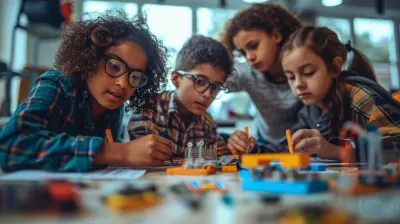
Building Confidence Through Self-Reflection in Education
17 July 2026
Confidence—it’s that secret sauce that makes students raise their hands, take on challenges, and crush their academic goals. Without it, education can feel like a relentless uphill battle. But here's the million-dollar question: How do we build this confidence?
Spoiler alert: It’s not about memorizing facts or acing every test. The real game-changer? Self-reflection.
That’s right! Taking time to step back, analyze, and understand personal growth is the superpower that fuels confidence. In this article, we’re going deep into how self-reflection can transform students from second-guessing their abilities to owning their success. 
? The Confidence Crisis in Education
Let’s be real—education can be a confidence killer.One bad grade, a tough subject, or a snarky comment from a peer can send students spiraling. The pressure to be perfect is overwhelming, and if students don't feel capable, they stop trying altogether.
But confidence isn’t something you’re just born with. Nope, it’s built—one reflection at a time.
Think of it like leveling up in a video game. You don’t start with full armor and superpowers; you develop them by learning from past experiences. The same goes for confidence in learning. 
? So, What is Self-Reflection?
Self-reflection is that little voice in your head that asks:- What did I do well?
- Where did I struggle?
- How can I improve next time?
Instead of mindlessly moving through school like a robot programmed to complete assignments, self-reflection makes students active participants in their education.
It’s about pausing and processing—because, let’s be honest, we don’t grow from repeating mistakes. We grow from understanding them. 
? How Self-Reflection Supercharges Confidence
Now, here’s the juicy part—how exactly does self-reflection boost confidence in education?1. Turns Failures into Stepping Stones
Mistakes? Oh, they’re inevitable. But instead of treating them like dead ends, self-reflection helps students see them as detours leading to success.When students look back on their struggles and figure out what went wrong, they gain control over their learning. Once they know how to fix mistakes, they feel capable—and that, my friends, is confidence in action.
2. Moves the Focus from Grades to Growth
Grades are important, sure. But fixating on them? Not so much.Self-reflection helps students shift from the toxic mindset of “I have to get an A” to “Am I improving?” That shift alone can make a world of difference.
When students celebrate progress instead of obsessing over perfection, they develop unshakable confidence—because they see real achievements, not just numbers on a report card.
3. Encourages Ownership Over Learning
Nothing builds confidence like realizing you’re in control.When students take the time to reflect, they stop blaming teachers, tests, or bad luck. Instead, they recognize what they can do to improve, which makes them feel empowered rather than helpless.
Self-reflection is like holding the remote control to your own success. It’s no longer about what happens to you—it’s about what you do about it.
4. Boosts Problem-Solving Skills
Confidence isn’t about knowing all the answers—it’s about knowing you can find them.When students reflect on challenges, they build problem-solving skills. They learn what strategies work (and which don’t), making them better equipped to handle future obstacles.
Think of it like a detective piecing together clues to solve a case. Self-reflection helps students crack the code of their own learning, making them feel like the geniuses they truly are.
5. Reduces Anxiety and Stress
School stress? Yeah, that’s real.But self-reflection can be a stress-relief tool. When students take time to understand their learning process, they feel more prepared and less panicked. Instead of drowning in anxiety, they develop a game plan—which, in turn, makes them feel way more in control.
Confidence thrives when fear takes a backseat. And self-reflection is the driver that puts fear in its place. 
? Practical Ways to Cultivate Self-Reflection in Learning
Alright, so we know self-reflection is powerful—but how do students actually do it? Here are some practical, no-BS strategies that work:✍ 1. Keep a Learning Journal
Encourage students to jot down:- What they learned today
- What they found difficult
- One thing they’re proud of
Over time, reading past entries will show them just how far they’ve come—confidence unlocked.
? 2. Ask the Right Questions
Instead of "Did I do well?", try:- What worked for me?
- What can I improve?
- What will I do differently next time?
The right questions lead to powerful insights—and insights lead to growth.
? 3. Use the "Two Stars and a Wish" Method
This simple technique involves:⭐ Two things you did well
✨ One thing you want to improve
It’s quick, easy, and incredibly effective at reinforcing strengths while identifying areas to grow.
⏳ 4. Make Reflection a Daily Habit
Confidence doesn’t come from one "aha!" moment—it's built through consistent self-reflection.Encourage students to spend just five minutes each day thinking about their learning. The results? A mindset makeover.
? 5. Embrace Constructive Criticism
Instead of dreading feedback, students can use it to grow. Self-reflection helps them see critique as a tool rather than an attack—making them stronger, wiser, and more confident.? Final Thoughts: Confidence is Built, Not Given
Confidence in education isn’t reserved for the naturally gifted or straight-A students. It’s built through self-awareness, perseverance, and reflection.By teaching students to look inward, recognize their growth, and take charge of their learning, we empower them to step into their education with boldness and belief in themselves.
So, the next time they doubt their abilities, remind them: Confidence isn’t about knowing all the answers—it’s about trusting that they can figure them out.
all images in this post were generated using AI tools
Category:
Self AssessmentAuthor:

Anita Harmon
Discussion
rate this article
1 comments
Antonia McGillivray
This article highlights the powerful link between self-reflection and confidence in students. Encouraging learners to explore their thoughts and experiences can truly transform their educational journey. Thank you for sharing these insights!
July 19, 2026 at 4:46 AM
Anita Harmon
Thank you for your thoughtful comment! I'm glad you found the insights valuable. Self-reflection really can make a big difference in students' confidence.