How Multicultural Education Will Shape Classrooms in 2026
15 April 2026
Imagine walking into a classroom in 2026. The walls aren’t just covered with alphabet posters and multiplication tables. Instead, you see a vibrant digital map glowing with real-time greetings from partner students in Nairobi, a project display celebrating the Lunar New Year alongside Diwali and Juneteenth, and a cozy reading nook with books in three different languages. The air hums not with the monotone of a single lecture, but with the lively buzz of small groups solving a problem using perspectives shaped by stories from around the globe. This isn’t a scene from a futuristic film; this is the joyful, dynamic reality that multicultural education is building for our near future.
By 2026, multicultural education will have evolved from a well-meaning "add-on" – a monthly potluck or a heritage day celebration – into the very heartbeat of the classroom. It will be the lens through which every subject is taught and the foundation upon which every relationship is built. We’re moving beyond simply acknowledging diversity to actively weaving it into the fabric of learning. So, let’s pull back the curtain and see what this beautifully transformed classroom actually looks, feels, and sounds like.
The Classroom as a Global Microcosm: Walls That Talk and Tech That Connects
First, let’s talk about the stage itself: the physical and digital classroom space. In 2026, the four walls of a classroom will feel more like a portal than a boundary.The End of the "Single-Story" Curriculum
Remember when history seemed to follow a single, predictable path, or literature came from a narrow canon of authors? That’s getting a major rewrite. Curriculums in 2026 will be dynamic, living documents. The story of mathematics will include the brilliance of the Arabic numeral system and the ancient Mayan concept of zero. Science lessons will highlight the ecological knowledge of Indigenous peoples alongside modern lab techniques. Literature circles will feature authors as diverse as the students themselves, ensuring every child can see their own story reflected and be fascinated by someone else’s. It’s like upgrading from a standard definition TV to a panoramic, 3D IMAX experience of human knowledge. You get the full, glorious picture, not just a cropped slice.
Technology as a Bridge, Not a Barrier
Here’s where it gets really exciting. Technology in 2026 won’t just be for typing essays or taking quizzes. It will be the ultimate connector. Imagine a routine "Global Morning Meeting" via secure, immersive video links with a sister classroom in Chile or Japan. Augmented Reality (AR) will allow students to "walk through" the streets of ancient Benin or stand in the bustling markets of Mumbai as part of a geography lesson. Collaborative tools will enable students in different countries to work on the same environmental project, analyzing local data to understand a global issue. The tech tools will become the railways and airways of young minds, making the world next door.
The Teacher as a Cultural Gardener and Facilitator
In this new ecosystem, the role of the teacher transforms beautifully. The sage on the stage becomes a guide from the side—or better yet, a cultural gardener.Cultivating Curiosity Over Correctness
Teachers in 2026 will be master facilitators of dialogue. Their primary skill won’t be just delivering information, but nurturing a classroom culture where questions are celebrated more than rote answers. They’ll be trained to mediate discussions about different cultural perspectives with sensitivity and joy. Think of them as the conductors of an orchestra, ensuring each unique instrument—each student’s background and voice—is heard, valued, and harmonized into the collective learning symphony. Their job is to till the soil, provide the nutrients of resources and safety, and watch in wonder as a garden of diverse thinkers blooms.
Lifelong Learning on Steroids
To keep up, teachers will be engaged in their own perpetual learning journey. Professional development will include deep dives into cultural competency, anti-bias training, and how to leverage new technologies for global connection. They’ll have personal learning networks (PLNs) that span the globe, sharing lesson plans and strategies with educators in different cultural contexts. The teacher’s desk becomes a launchpad for worldwide collaboration.
The Students as World Citizens and Co-Creators
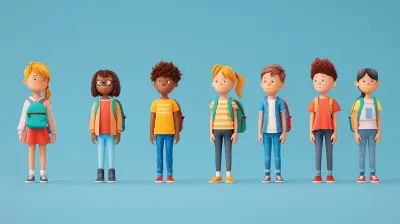
Now, let’s meet the true stars of this show: the students. In the 2026 multicultural classroom, students aren’t just passive recipients of knowledge. They are world citizens in training and active co-creators of their learning journey.Empathy as a Core Subject
Empathy won’t be a soft skill talked about during a weekly circle time; it will be a core academic muscle, exercised daily. Through project-based learning that tackles real-world problems—like designing a sustainable community or creating a campaign for digital kindness—students will need to understand diverse viewpoints to succeed. They’ll learn that to solve a complex problem, you need a team that thinks differently. It’s like building the ultimate puzzle; you need every uniquely shaped piece to see the complete image. This constant practice builds a generation of collaborators, not just competitors.
Identity Affirmation and Academic Confidence
Here’s a powerful truth: when a student walks into a room and every aspect of their identity—their home language, their family’s traditions, their community’s history—is not just tolerated but integrated and celebrated as a resource for learning, something magical happens. Their shoulders relax. Their engagement soars. Their innate curiosity is unlocked. A child who sees their grandmother’s native language used in a linguistics lesson feels a profound sense of belonging. That belonging is the rocket fuel for academic risk-taking and confidence. The classroom becomes a place where you are known, valued, and then challenged to grow.
The Challenges: Navigating the Beautiful Complexity
This journey won’t be without its bumps. Implementing such a deep, systemic change is like renovating a house while living in it. We’ll face challenges: Resource Equity: Ensuring every* school, not just those in well-funded districts, has access to the technology, updated materials, and teacher training required.
* Beyond Surface-Level: Moving past the "foods and festivals" approach to a nuanced understanding of cultures, including their histories of struggle and resilience.
* Parental and Community Buy-In: Communicating the "why" effectively to all stakeholders, showing that this approach strengthens core academics and future-ready skills.
But here’s the thing about challenges in education: they are just problems waiting for a classroom of diverse, empathetic, critical thinkers to solve them. The very model we’re building creates the problem-solvers we need.
The Ripple Effect: Why This Matters Beyond the Bell
When the final bell rings at 3 p.m. in 2026, the impact of this education doesn’t stay at the school gate. It ripples out into the world. We are nurturing a generation that: Thinks in "And," Not "Or": They can hold multiple perspectives at once. You can be fiercely proud of your own culture and* deeply respectful of another’s.
* Is Innovation-Ready: The biggest breakthroughs happen at the intersection of disciplines and perspectives. These students live at that intersection.
* Views Difference as an Asset: In a world riddled with division, they have been practiced since kindergarten in seeing human diversity as our collective strength, the ultimate source of creativity and resilience.
Conclusion: A Joyful Invitation to the Future
So, how will multicultural education shape classrooms in 2026? It will shape them into vibrant, talking, connecting, feeling hubs of humanity. It will shape them to be microcosms of the world we hope to see: interconnected, understanding, and fiercely collaborative.This future isn’t a distant dream. It’s being built today by dedicated educators, forward-thinking policymakers, and communities demanding better. It’s a future where learning is a joyful exploration of the incredible human tapestry. And the best part? We’re all invited to be part of the change. The question is, are you ready to step into that classroom? I know I am, and the view from 2026 looks brilliantly, beautifully human.
all images in this post were generated using AI tools
Category:
Multicultural EducationAuthor:

Anita Harmon
Discussion
rate this article
2 comments
Evren Lambert
As we stand on the brink of 2026, the evolution of multicultural education invites us to ponder: what hidden stories will unfold in our classrooms? Will these diverse narratives weave a richer tapestry of learning, or will they reveal deeper divides? The future whispers—are we ready to listen?
April 18, 2026 at 12:09 PM
Anita Harmon
Multicultural education has the power to enrich our classrooms by bringing diverse perspectives to the forefront. If we embrace these narratives, we can foster inclusion and understanding, but it's crucial to address any divides that may arise. Let's be proactive in listening and learning from each other.
Hazel Patterson
Embracing multicultural education is key to fostering inclusivity and understanding in our classrooms. By 2026, diverse perspectives will empower students, enriching their learning experiences and preparing them to thrive in a global society. Let’s shape that future together!
April 15, 2026 at 2:24 AM
Anita Harmon
Absolutely! Embracing diverse perspectives will not only enrich learning but also prepare our students for a connected world. Together, we can make a real impact.