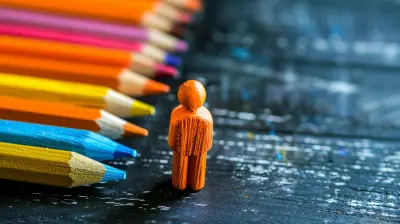
How AI Will Transform Self-Directed Learning by 2027
22 May 2026
Let me paint you a picture. It's 2027. You wake up, grab your coffee, and open a learning app. Within seconds, it knows exactly where you left off yesterday, what confused you last week, and even what you're likely to forget by next Tuesday. It doesn't just feed you information. It asks you a question that makes you stop and think, because it knows you learn best when you're slightly frustrated. Sound like science fiction? It's not. By 2027, AI will reshape self-directed learning in ways that feel almost personal, almost human. And that's exactly the point.
The Old Way vs. The New Way
Think back to the last time you tried to teach yourself something. Maybe it was coding, or a language, or even how to fix a leaky faucet. You probably started with a Google search, then fell down a YouTube rabbit hole, then bought a course you never finished. Sound familiar? Self-directed learning has always been a lonely, messy, and often inefficient process. You are the student, the teacher, the librarian, and the motivator all at once. It's exhausting.But here's the thing: humans are wired to learn by doing, by failing, by asking questions in the moment. Traditional self-directed learning forces you to plan everything upfront, like packing for a trip when you have no idea what the weather will be. AI changes that. By 2027, AI will act as your personal learning co-pilot, adjusting the route as you go. It will watch your confusion, celebrate your breakthroughs, and nudge you when you're about to quit.
The End of One-Size-Fits-All Content
Right now, most online courses are built for the average learner. But nobody is average. You might be a visual learner who hates reading long paragraphs. Your neighbor might learn best by listening to podcasts while jogging. AI by 2027 will break the mold. It will analyze your learning history, your attention span, even your emotional state. If you're tired, it might offer a short video instead of a dense article. If you're bored, it will throw in a gamified challenge. If you're stuck, it will rephrase the concept three different ways until something clicks.This is not just about personalization. It's about respecting your time. How many hours have you wasted on material that was either too easy or too hard? AI will eliminate that friction. It will feel like having a tutor who actually remembers everything you ever said, and cares about your progress. That level of attention is something even the best human teachers struggle to provide.
Real-Time Feedback That Actually Helps
One of the biggest pain points in self-directed learning is the lack of feedback. You write a piece of code, but you don't know if it's elegant or just sloppy. You practice a language, but you're not sure if your accent sounds natural. You try to solve a math problem, but you have no idea where you went wrong. By 2027, AI will offer feedback that is immediate, specific, and actionable.Imagine speaking a sentence in Spanish, and a voice assistant tells you not just that you mispronounced a word, but exactly how to move your tongue to get it right. Or imagine writing an essay, and an AI points out not just grammar errors, but logical fallacies and weak arguments. This is not the robotic "good job" or "try again" we see today. This is nuanced feedback that mimics a skilled mentor who knows when to push and when to praise.
The Rise of the AI Mentor
Let's be honest. Most self-directed learners struggle with motivation. You start strong, then life happens. You skip a day, then a week, then you feel guilty, and eventually you give up. AI by 2027 will address this by becoming a mentor, not just a tool. It will track your habits and notice patterns you don't see. Did you always quit after chapter three? The AI will figure out why and adjust the difficulty. Do you learn better in the morning? It will schedule your sessions accordingly.But here's the really interesting part: AI will learn your emotional triggers. If you get frustrated easily, it might offer encouragement before you even ask for it. If you're overconfident, it might challenge you with harder problems. It will be like having a coach who knows your personality better than you do. That might sound creepy, but think about it. How many times have you wished someone would just push you in the right direction without nagging?
Learning Becomes a Conversation
Right now, learning is mostly one-way. You read, you watch, you memorize. But by 2027, AI will make learning a two-way conversation. You will be able to ask questions in natural language, and the AI will answer in context. Not like a search engine that spits out ten links, but like a friend who says, "Oh, that's a good question. Let me explain it with an example."This shift is huge. It means you can explore tangents without losing the main thread. You can ask "why" until you truly understand, without worrying about looking stupid. You can even argue with the AI, challenge it, ask for counterarguments. This kind of active learning is proven to be far more effective than passive consumption. By 2027, AI will make this the default experience, not a premium feature.
The Death of the "Course"
Let's talk about courses. They are linear, rigid, and built for the past. You buy a course, you follow the modules, you get a certificate. But life is not linear. Real learning happens in spirals, in loops, in messy overlaps. By 2027, AI will move us away from the concept of a course and toward a "learning ecosystem." You will have a persistent profile that tracks your skills, gaps, and interests. The AI will recommend micro-lessons, projects, and challenges based on what you need right now, not what some curriculum designer decided six months ago.Imagine you want to learn data science. Instead of signing up for a 40-hour course, you tell the AI: "I need to analyze sales data for my small business." The AI builds a custom path for you. It teaches you just enough statistics to make sense of the numbers, just enough Python to run the analysis, and just enough visualization to present the results. When you're done, you have a real skill, not a certificate. That is the future.
The Role of Human Connection
Will AI replace human teachers? No. But it will change their role. By 2027, self-directed learners will use AI for the boring stuff: drilling, quizzing, tracking progress. They will save human interaction for the things that matter: debate, mentorship, inspiration, and emotional support. A human teacher can tell you why your idea is brilliant. AI can tell you why your code is broken. Both are valuable, but they are different.The beauty of AI is that it makes access to high-quality learning scalable. You don't need to live in a big city or have rich parents to get a world-class education. By 2027, a teenager in rural India could have the same AI mentor as a CEO in Silicon Valley. That is a radical leveling of the playing field. And it will force traditional education systems to adapt or become irrelevant.
The Dark Side: What We Must Watch Out For
Let's not pretend this is all sunshine and roses. AI in self-directed learning comes with real risks. First, there is the issue of data privacy. If an AI knows your learning habits, your weaknesses, your emotional triggers, who owns that data? In 2027, we will need strong regulations to prevent companies from using this information to manipulate us or sell us things.Second, there is the danger of echo chambers. If an AI only shows you content you agree with, you will never grow. Good AI will challenge you, expose you to opposing viewpoints, and make you uncomfortable. But bad AI will keep you happy and stagnant. The difference lies in how the AI is designed. We need to demand transparency.
Third, there is the risk of over-reliance. If you always turn to AI for answers, you might lose the ability to struggle productively. Struggle is part of learning. It builds grit and deep understanding. AI by 2027 must be smart enough to know when to step back and let you fail. That is a delicate balance.
How to Prepare for This Shift
If you are a self-directed learner today, you are already ahead of the curve. But to thrive in 2027, you need to start building the right habits now. First, get comfortable with asking questions. The more specific your questions, the better AI can help you. Second, learn to evaluate information critically. AI can give you answers, but it is up to you to decide what is true and what is BS. Third, embrace lifelong learning. The skills you have today will be outdated sooner than you think. AI will help you update them, but only if you are willing to adapt.For educators and content creators, the message is clear: stop building static courses. Start building adaptive experiences that can be remixed and personalized. The days of "one course fits all" are numbered. By 2027, learners will expect AI to know them, understand them, and guide them. If you can't deliver that, you will be left behind.
A Personal Note
I have been a self-directed learner my whole life. I have bought courses I never finished, read books I forgot, and watched countless tutorials that went in one ear and out the other. I have felt the frustration of being stuck, the loneliness of learning alone, and the thrill of finally understanding something difficult. AI will not replace that journey. But it will make it less lonely, less frustrating, and more rewarding. By 2027, I believe we will look back at the way we learn today and wonder how we ever managed without it.So, here is my question to you: Are you ready to learn with AI, or will you wait until it is forced on you? The choice is yours. But the clock is ticking.
The Bottom Line
AI will not just change self-directed learning by 2027. It will revolutionize it. It will make learning personal, interactive, and deeply human in ways we are only beginning to imagine. The technology is already here. The question is whether we will use it wisely. If we do, the future of learning will be brighter than ever. If we don't, we risk creating a world of passive consumers who never think for themselves. The power is in our hands. Let's use it.
all images in this post were generated using AI tools
Category:
Self Directed LearningAuthor:

Anita Harmon
Discussion
rate this article
1 comments
Juniper McVeigh
Oh great, by 2027, AI will finally teach us how to learn... because clearly, we've all been waiting for a robot to guide our study sessions instead of, you know, using our brains. How exciting!
May 24, 2026 at 5:00 AM
Anita Harmon
I see your point. AI isn't meant to replace our brains but to enhance our learning. It can provide tools and resources that make self-directed learning more accessible and effective.