Exploring the Future of E-Learning: Trends to Watch in 2027
6 September 2026
Let me paint you a picture. It is 2027. A mechanical engineering student in Nairobi is disassembling a virtual jet engine using haptic gloves, while her counterpart in Detroit reviews the same exact component in a shared digital twin. Neither of them is watching a video. Neither is reading a PDF. They are both doing, failing, iterating, and succeeding in a space that feels more like a workshop than a website. That is not science fiction. That is the logical endpoint of several converging trends that are already reshaping how we think about online education.
The e-learning industry has a bad habit of overpromising and underdelivering. We saw it with MOOCs in the early 2010s, with gamification in the mid-2010s, and with the first wave of AI tutors that were essentially glorified chatbots. But the next few years are different. The underlying technology has matured, the economic pressure on traditional education has intensified, and the expectations of learners have shifted dramatically. In 2027, e-learning will not just be about delivering content. It will be about creating environments that respond to you, adapt to you, and refuse to let you fail silently.
This article is not a listicle of buzzwords. It is a practical guide to the forces that will actually matter in the next few years, written for educators, instructional designers, corporate training managers, and anyone who cares about making learning stick. We will look at the good, the bad, and the complicated. And we will talk about what you should do today to prepare for a future that is arriving faster than most people think.

The Death of the One-Size-Fits-All Course
For the last twenty years, the standard model of e-learning has been the course. You sign up, you watch modules in sequence, you take a quiz, you get a certificate. It is linear, predictable, and fundamentally at odds with how human beings actually learn. We do not learn in straight lines. We learn in spirals, loops, and sudden leaps. We learn by making mistakes that matter, by asking questions that are not in the script, and by connecting new information to things we already know.By 2027, the course as a fixed container will be largely obsolete for serious learning. In its place, we will see adaptive learning pathways that are assembled in real time based on your performance, your goals, and even your mood. This is not a new idea. Adaptive learning systems have existed in various forms since the 1970s, but they were constrained by rule-based logic. If a student got question three wrong, the system showed them the same explanation again, just slower.
The shift is toward probabilistic models powered by machine learning. Instead of following a decision tree, the system looks at thousands of data points from your behavior, compares them with millions of other learners, and predicts the most likely reason you are struggling. Are you bored? Are you missing a prerequisite? Are you reading too fast? Are you tired? In 2027, the system will adjust not just the content, but the format. It might switch you from a text explanation to a short interactive simulation. It might give you a harder problem to re-engage your attention. It might even tell you to take a break and come back in an hour.
The practical implication is huge. For corporate training, this means employees no longer spend forty minutes on a module when they only needed fifteen. For higher education, it means a student who enters with weak algebra skills is not forced to sit through a semester of calculus readiness. The system fills the gaps invisibly, in the background, while the student works on the actual material.
But there is a trade-off. Adaptive systems require enormous amounts of data to work well, and that data comes from watching people struggle. This raises serious privacy questions. Who owns the data? What happens when an employer uses learning data to make promotion decisions? The technology is neutral, but its application is not. In 2027, we will see the first major legal battles over learning analytics. Institutions that ignore this issue are setting themselves up for a crisis.

Artificial Intelligence as a Teaching Partner, Not a Replacement
The phrase "AI tutor" has been thrown around for years, but most of what has been marketed under that label is embarrassingly primitive. A system that gives you a canned response when you type "I don't understand" is not a tutor. It is a search engine with a personality disorder.The real breakthrough in 2027 will not be a single AI that knows everything. It will be a network of specialized AI agents that work together, each handling a different part of the teaching process. One agent monitors your attention and engagement. Another analyzes your written responses for conceptual gaps. A third generates practice problems on the fly. A fourth acts as a Socratic interlocutor, asking you questions rather than giving you answers.
This division of labor is important because no single model is good at everything. Language models are great at generating text but terrible at understanding spatial reasoning. Computer vision systems are great at recognizing patterns but poor at explaining them. By 2027, the best e-learning platforms will be orchestrating these different intelligences, not trying to cram everything into one monolithic AI.
Consider the example of a medical student learning to interpret X-rays. A vision model can identify that the student missed a subtle fracture, but it cannot explain why. A language model can explain the radiological principles, but it cannot see the image. In 2027, these two systems will work in tandem. The vision model flags the error, and the language model generates a targeted explanation that references the specific area of the image the student overlooked. That is not a replacement for a human teacher. It is a force multiplier that allows a human teacher to spend their limited time on the students who need them most.
The common mistake that organizations make is assuming that AI should replace human interaction entirely. It should not. The best outcomes in 2027 will come from hybrid models where AI handles the repetitive, data-intensive work, and humans handle the emotional, motivational, and creative aspects of teaching. The AI can grade a thousand essays and identify which students are struggling with thesis statements. But it is the human instructor who writes the encouraging note that convinces a discouraged student to try again.
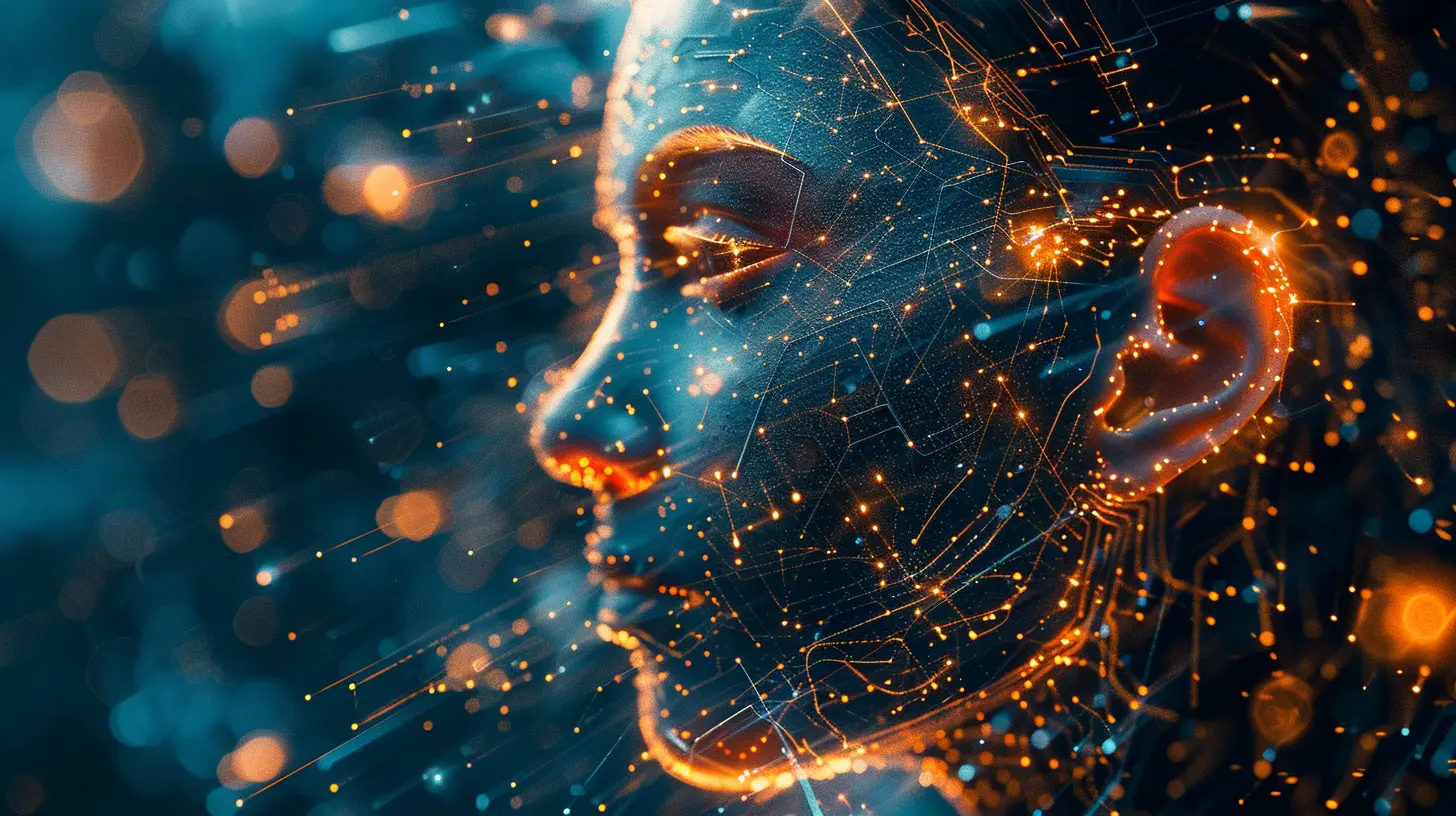
Immersive Learning Moves Beyond the Hype
Virtual reality in education has been stuck in a demo loop for a decade. Everyone has seen the chemistry lab simulation where you can mix virtual chemicals without blowing anything up. But very few institutions have scaled these experiences to actual curricula. The reasons are not hard to understand. Headsets are expensive, content development is time-consuming, and the pedagogical benefits are often unclear. Why spend tens of thousands of dollars on a VR lab when a well-made video shows the same reaction?The answer, which will become obvious by 2027, is that VR and its cousin augmented reality are not for showing things. They are for doing things that are impossible or dangerous in the real world. A video cannot give you the visceral feedback of a surgical incision. A textbook cannot simulate the stress of a cockpit emergency. A lecture cannot replicate the spatial reasoning required to inspect a building's structural integrity.
The key trend to watch is the shift from standalone VR experiences to integrated mixed reality. In 2027, a welding student will not put on a bulky headset and disappear into a cartoon world. They will wear lightweight smart glasses that overlay guidance directly onto a real piece of metal. The glasses will show them the correct angle, the correct speed, and the correct temperature, in real time, as they actually weld. When they make a mistake, the system will not just tell them. It will show them a ghost image of the correct path superimposed on their own work.
This is a fundamentally different value proposition. It is not about escaping reality. It is about enhancing reality with just-in-time information. The training happens in the context of the real task, which means the transfer of learning to the job is almost immediate. This approach is already showing promise in fields like manufacturing, healthcare, and logistics, and it will expand dramatically over the next few years.
However, there are important caveats. Immersive learning is expensive to produce and requires significant technical support. It is not a solution for every subject. Learning to write a persuasive essay does not require a VR headset. Learning to negotiate a business deal might benefit from role-playing in a virtual environment, but it can also be done effectively with a skilled human actor. The mistake is to adopt immersive technology because it is flashy rather than because it solves a specific problem. The question to ask is not "Can we use VR?" but "What can VR do that our current methods cannot?"

Micro-Credentials Get Teeth
The traditional degree is not dying, despite what the pundits have been saying for years. But its monopoly on signaling competence is eroding. Employers have become increasingly skeptical that a four-year degree guarantees any specific skill. They have seen too many graduates with impressive transcripts who cannot write a coherent email or debug a simple program.The response, which will reach maturity in 2027, is the micro-credential. But not the kind of micro-credential that exists today. The current version is mostly useless. A certificate from an online course that took six hours and required only a multiple-choice quiz is not a meaningful signal of anything. It is a participation trophy.
The 2027 version is different. It is based on demonstrated competency, not seat time. It is verified through a combination of proctored assessments, portfolio reviews, and real-world project evaluations. It is portable, meaning it is stored in a digital wallet that the learner controls, not locked inside a proprietary platform. And it is stackable, meaning that a series of micro-credentials can eventually combine into something that looks like a degree.
The most interesting development is the emergence of industry-specific credentialing bodies. Professional associations in fields like accounting, nursing, and software engineering are starting to define what a meaningful micro-credential looks like. They are setting the standards, and they are the ones who will vouch for the credential's value. This is a significant shift from the current model where the training provider is also the certifier. That is like a professor grading their own exam without any external oversight.
For learners, the implication is clear. Do not chase certificates from random platforms. Look for credentials that are endorsed by a recognized professional body, that require you to demonstrate your skill in a realistic setting, and that are recognized by actual employers in your field. The days of collecting badges like they are merit stickers are over. In 2027, a well-chosen micro-credential will carry more weight than a generic bachelor's degree from a non-selective institution. That is not an exaggeration. That is the direction the labor market is moving.
Learning Analytics Become a Strategic Asset
For most of its history, e-learning has been a black box. You know that a student logged in, watched some videos, and completed some quizzes. You have no idea whether they actually learned anything, whether they are likely to drop out, or whether they will be able to apply the material six months from now. That is about to change in a dramatic way.The field of learning analytics is moving from descriptive dashboards to predictive and prescriptive systems. By 2027, a well-designed e-learning platform will not just tell you that a student scored 70 percent on a test. It will tell you that this student is showing a pattern of behavior that correlates with a 90 percent chance of dropping out in the next two weeks. It will tell you that the student is struggling specifically with the concept of conditional probability, and that they tend to perform better when the material is presented visually rather than textually. It will even suggest an intervention, such as a peer tutoring session or a modified assignment.
This is powerful, but it is also dangerous. The same analytics that can help a struggling student can also be used to deny them opportunities. An insurance company might use learning data to assess risk. An employer might use it to make hiring decisions. A university might use it to justify expelling a student who is predicted to fail. The ethical frameworks for these applications are woefully underdeveloped.
The organizations that will succeed in 2027 are the ones that treat learning analytics as a strategic asset, not just a reporting tool. That means investing in data infrastructure, hiring people who can interpret the data, and, most importantly, establishing clear policies about how the data will be used and protected. Transparency is not optional. Learners need to know what is being tracked, why it is being tracked, and who has access to it. If they do not trust the system, they will game it, and the data will become meaningless.
The Social Layer Becomes the Core
The dirty secret of online learning is that it can be profoundly lonely. The completion rates for self-paced courses have always been abysmal, and the primary reason is not lack of motivation or lack of quality content. It is lack of connection. Human beings are social animals. We learn from each other, we motivate each other, and we hold each other accountable.The early attempts to add social features to e-learning were superficial. Discussion forums were graveyards of unanswered questions. Group projects were exercises in frustration, with the same person doing all the work while others contributed nothing. The problem was that these features were bolted on as an afterthought. They were not integrated into the learning experience.
In 2027, the social layer is the learning experience. The shift is from asynchronous discussion boards to synchronous, small-group collaborative spaces. Think of it as a hybrid between a study group and a multiplayer game. Learners are placed into cohorts of five to seven people who progress through the material together. They have shared goals, shared challenges, and a shared schedule. They meet in virtual spaces that are designed for collaboration, with shared whiteboards, document editing, and video conferencing built in.
The technology that makes this work is the same technology that powers online gaming. Voice chat, presence indicators, and real-time collaboration tools have matured to the point where they are seamless. The pedagogical model is also more sophisticated. Instead of asking learners to "discuss" a topic, which often leads to superficial posts, the system assigns specific roles within the group. One person is the researcher, another is the devil's advocate, a third is the synthesizer. These roles rotate, ensuring that everyone develops a range of skills.
The result is that learning becomes a social contract. You are not just letting yourself down if you do not do the work. You are letting down your group. This social pressure is far more effective than any reminder email or gamification badge. It is the reason that live, instructor-led training has always had better outcomes than self-paced e-learning. The challenge is to scale that intimate, accountable environment to thousands of learners at once. By 2027, the best platforms will have cracked this code.
Practical Advice for Preparing for 2027
If you are an educator or a training professional, you do not need to wait until 2027 to start preparing. The trends described above are already visible, and you can begin adapting your practice today. Here are five concrete recommendations.First, stop building courses and start building pathways. Think about the learning journey as a continuous process, not a finite event. Design your material so that it can be reorganized, remixed, and adapted based on individual needs. This means modularizing your content into small, self-contained units that can be assembled in different combinations.
Second, invest in your own data literacy. You do not need to become a data scientist, but you need to understand what learning analytics can and cannot tell you. Learn to ask the right questions. Do not just look at completion rates. Look at the moments where learners struggle, where they succeed, and where they disengage. That is where the actionable insight is.
Third, experiment with AI tools, but do not be seduced by them. Use AI to automate the boring parts of your job, like generating practice questions or grading routine assignments. But do not outsource the parts that require judgment, empathy, and creativity. Those are the parts that make you valuable.
Fourth, think carefully about assessment. The multiple-choice quiz is not going away, but it is becoming less important. In 2027, the most valuable credentials will be based on performance assessments, where learners demonstrate their skills in realistic, complex scenarios. Start developing those now, even if they are clumsy at first.
Finally, be skeptical of anyone who promises a silver bullet. E-learning is a tool, not a magic wand. It works when it is designed thoughtfully, supported by good instructors, and embedded in a culture that values learning. It fails when it is treated as a cheap substitute for real education. The future is not about technology. It is about how we use technology to amplify human potential.
The next few years will be uncomfortable for many institutions that have grown complacent. The pace of change is accelerating, and the gap between the leaders and the laggards is widening. But for learners, the future is bright. They will have access to learning experiences that are more personalized, more engaging, and more effective than anything that came before. That is worth getting excited about.
all images in this post were generated using AI tools
Category:
E LearningAuthor:

Anita Harmon
Discussion
rate this article
2 comments
Julia Baxter
The article offers valuable insights into the evolving landscape of e-learning. By highlighting trends like AI integration and personalized learning experiences, it encourages educators to adapt and innovate, ensuring that they meet the diverse needs of future learners.
September 22, 2026 at 12:11 PM
Anita Harmon
Thank you for your thoughtful comment! I'm glad you found the insights valuable. Adapting to these trends is crucial for the future of education.
Valeris McGuire
This article offers valuable insights into upcoming e-learning trends that can shape our educational landscape in the next few years.
September 6, 2026 at 3:37 AM
Anita Harmon
I'm glad you found the insights valuable. Exciting times are ahead for e-learning!