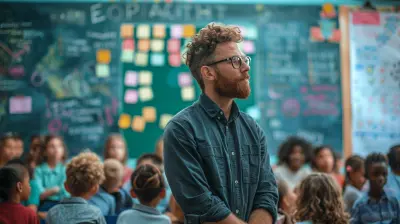
Breaking Down Barriers: Inclusivity in Education Reform
13 August 2026
Let’s face it — education isn’t one-size-fits-all. Not everyone shows up to the classroom with the same backpack full of opportunities. Some students are sprinting ahead with top-notch resources, while others are tripping over systemic obstacles before they even hit the starting line. That just doesn’t sit right, does it?
“Breaking Down Barriers: Inclusivity in Education Reform” isn’t just a catchy phrase to toss around in policy meetings — it’s an urgent call to action. It’s time to peel back the layers of what makes our education system tick (or in some cases, what makes it jam up like a printer on report card day) and start creating a more inclusive environment for every student.
Ready? Let’s take a deep dive into what inclusivity in education reform really means and how it can shake up the system for the better.
What Does Inclusivity in Education Even Mean?
Inclusivity isn’t just letting everyone sit at the lunch table — though hey, that’s a good start. In education, it means making sure everyone, regardless of their race, gender, ability, income level, language, or background, gets an equal shot at success. Think of it like adjusting the height of the basketball hoop so that everyone gets a chance to score — not just the tallest players on the court.Inclusivity ensures that students feel seen, supported, and valued. It’s about recognizing the unique challenges students face and adapting our schools to serve them better, not forcing them to fit into a mold that wasn’t built with them in mind.
Why Education Reform Needs a Makeover
Let’s get real. The current system? It’s outdated in a lot of ways. Designed decades ago, it was built for a society that looked very different from the one we live in today. Diversity in classrooms has skyrocketed, technology has evolved at warp speed, and we’ve learned so much more about how students actually learn (spoiler alert: it's not always by sitting still and listening to a lecture).Still, many schools stick to cookie-cutter teaching methods, biased curricula, and underfunded programs. The result? Entire groups of students fall through the cracks — and once they do, climbing back up is harder than trying to find a working pencil in a middle school lost-and-found bin.
The Big Barriers That Need Breaking
Before we talk solutions, let’s call out the big, ugly barriers standing in the way of inclusive education.1. Socioeconomic Gaps
Let’s be honest — money talks, even in classrooms. Kids from wealthier families often have access to better-funded schools, more extracurriculars, private tutors, and all the tech tools money can buy. Meanwhile, students in lower-income areas are sometimes scraping by with outdated textbooks and overworked teachers.2. Racial and Cultural Bias
Despite the best intentions, biases still find their way into schools. From disciplinary actions that disproportionately affect students of color to teaching materials that ignore non-Western cultures, the deck can be stacked against marginalized students before they even raise their hand.3. Disabilities and Special Needs
Students with disabilities face unique challenges, and while many schools offer support, it’s often not enough. Some lack proper accommodations, trained staff, or inclusive lesson planning. That’s like inviting everyone to the dance, but not building a ramp to the dance floor.4. Language Barriers
English language learners (ELLs) are some of the hardest-working students in the room, juggling academics while mastering a new language. Without proper support, they can fall behind quickly — not because they lack intelligence, but because the system wasn’t built for multilingual learners.5. Gender and LGBTQ+ Inclusion
Schools should be safe havens, but for many LGBTQ+ students, that’s not the reality. Bullying, lack of representation in curriculum, and policies that fail to support diverse identities can make going to school feel like navigating a minefield.
So, What Does Real Reform Look Like?
Now that we’ve ripped the band-aid off, let’s talk solutions. How do we actually fix these problems? Good news: we’ve got options. Better news: many of these changes are already being pushed forward by passionate educators, students, and advocates.1. Diversifying Curriculum
Imagine being a student and never seeing anyone like you in your history books. That’s the reality for lots of kids. A more inclusive curriculum doesn’t just boost engagement; it validates experiences and expands knowledge. Let’s tell stories from around the world, celebrate different cultures, and finally move beyond that textbook chapter titled “Ancient Civilizations” that somehow stops at ancient Rome.2. Investing in Equity
This isn’t about making every school identical — it’s about making sure every student has what they need to succeed. That might mean sending more resources to underfunded districts, hiring more counselors, or offering free after-school programs. Think of it like giving everyone shoes that actually fit, instead of handing out one-size-fits-none sneakers.3. Embracing Universal Design for Learning (UDL)
UDL is like the Swiss Army knife of education. It’s a teaching framework that plans for all types of learners — visual, auditory, kinesthetic, neurodivergent, you name it. It makes learning flexible, engaging, and accessible. Because honestly, no two brains are wired the same, so why should lessons be?4. Supporting Teachers as Change Agents
Teachers are on the front lines every single day. But if we expect them to foster inclusive classrooms, we have to give them the tools to do it. That means ongoing training in cultural competency, trauma-informed teaching, disability awareness, and inclusive practices. Basically, help teachers become rockstars — because they already are.5. Listening to Students
Wild idea: what if we actually asked students what they need? They're the experts of their own experience, after all. Including student voices in decision-making helps shape policies and practices that truly reflect what’s happening on the ground.Real-Life Wins That Inspire
This all might sound a bit pie-in-the-sky, but here’s the kicker — it’s already happening in pockets around the world.- In Finland, schools emphasize equity, student well-being, and teacher autonomy, leading to consistently high performance across socioeconomic groups.
- In New York City, some schools are using restorative justice instead of traditional suspensions, helping reduce disciplinary disparities.
- In California, bilingual education programs have expanded, giving students the opportunity to learn in their native language while mastering English — a win-win.
Small changes, big impact. That’s the power of inclusive reform.
How Can You Help Move the Needle?
You don’t need a fancy title or a seat on the school board to push for change. Advocacy starts with awareness — and a little courage. Here’s how you can be part of the movement:- Parents: Ask questions, speak up at PTA meetings, and push for more inclusive materials and policies.
- Students: Share your experiences, support each other, and get involved in clubs or initiatives that promote equity.
- Teachers: Keep learning, keep adapting, and keep fighting for your kids.
- Community members: Volunteer, donate, and show up. Schools are stronger when the community backs them up.
A Future Built on Inclusion
Picture a classroom where every student — regardless of their zip code, background, or ability — feels like they belong. Where their culture is reflected in the curriculum, where their needs are met with compassion, and where they're empowered to dream big.That’s not just idealism — it’s the goal of inclusive education reform. It will take time, effort, and probably more coffee than we'd like to admit. But it’s worth it. Because every child deserves more than just access to education — they deserve equity in education. And that starts with breaking down the barriers that never should’ve been there in the first place.
Let’s build a better system — one classroom, one policy, one “aha!” moment at a time.
all images in this post were generated using AI tools
Category:
Education ReformAuthor:

Anita Harmon
Discussion
rate this article
2 comments
Vanessa Reynolds
Inclusivity in education? It's like making sure everyone gets a slice of the cake... not just the frosting! Let's dig in and share the layers!
August 17, 2026 at 12:41 PM
Anita Harmon
I love that analogy! Everyone deserves not just a slice but a chance to enjoy every layer of the educational experience. Let's keep this conversation going!
Megan Russell
Oh great, another article about inclusivity in education reform. Because clearly, if we just keep talking about it, all the problems will magically disappear. Maybe next time we can just throw a glitter party and call it a day... Sounds effective, right?
August 14, 2026 at 12:23 PM
Anita Harmon
I get your frustration. It can feel overwhelming. But open conversations are a crucial first step toward real change... even if it doesn't seem that way at times.