Why Cultural Competence is the New Literacy
24 October 2026
For most of modern history, literacy meant one thing: the ability to read and write. If you could decode text and put words on a page, you were considered educated. That definition served us well when information moved slowly and communities stayed relatively homogeneous. But the world has changed, and the skills that once guaranteed success are no longer sufficient on their own.
Think about the last time you misread a situation. Maybe a colleague went quiet in a meeting and you assumed disengagement, when in fact they were showing respect by not interrupting a senior team member. Or perhaps you sent a message you thought was warm and encouraging, only to learn it landed as condescending. These moments are not failures of intelligence or goodwill. They are failures of cultural competence, and they are becoming more expensive by the day.
Cultural competence is the ability to understand, communicate with, and work effectively across cultural differences. It is not about memorizing etiquette rules or becoming fluent in a dozen languages. It is a way of perceiving, interpreting, and responding to the world that accounts for the fact that other people do not see that world the same way you do. And increasingly, it functions as a form of literacy in its own right, a baseline requirement for functioning well in schools, workplaces, and public life.

What Literacy Really Means Now
The word literacy has already expanded well beyond reading and writing. We talk about digital literacy, financial literacy, media literacy, and health literacy. Each of these represents a domain where basic competence is required to participate fully in modern society. Cultural competence belongs on that list, and arguably at the top of it.Here is why. Reading and writing allow you to access information. Cultural competence allows you to access people. And in almost every field, from medicine to management to education, outcomes depend less on what you know individually and more on how well you can coordinate with others. A doctor who cannot read a chart is dangerous. A doctor who cannot read a patient's discomfort, hesitation, or unspoken fear is equally dangerous, just in a less obvious way.
The parallel goes further. Traditional literacy involves several layers: decoding symbols, understanding vocabulary, grasping context, and interpreting meaning. Cultural competence works the same way. Decoding is noticing behavior and language. Vocabulary is understanding the norms and references of another group. Context is knowing the history and power dynamics at play. Interpretation is the ability to form accurate judgments rather than projections. People who skip the deeper layers and stop at surface-level etiquette often cause more harm than those who admit they do not know.
The Cost of Cultural Blind Spots
It is tempting to treat cultural competence as a soft skill, a nice-to-have that improves harmony but does not affect the bottom line. The evidence from real-world practice suggests otherwise.In healthcare, research and clinical experience have long shown that patients from marginalized or minority backgrounds often receive different quality of care, sometimes because of explicit bias but more often because of communication breakdowns. A patient who nods politely may be signaling respect rather than agreement. A family that wants to make medical decisions collectively may be perceived as difficult rather than involved. Clinicians who lack the framework to interpret these differences misdiagnose, overtreat, or lose trust. The cost is measured in health outcomes, not just feelings.
In business, cross-cultural missteps can derail negotiations, damage partnerships, and alienate talent. A direct feedback style that works in one country can humiliate a colleague in another. A marketing campaign that seems clever in one market can be offensive in another. Teams that span time zones and cultures lose productivity not because of time differences but because of interpretation differences. The silent friction of misunderstanding drains energy that should go toward the work itself.
In education, teachers who cannot read the cultural cues of their students may mistake reserve for disinterest, enthusiasm for disruption, or family involvement for interference. Students who feel misread disengage. The result is a widening gap that looks like an achievement problem but is really a literacy problem, on both sides of the desk.

Why This Is Happening Now
Three forces have pushed cultural competence from a specialist concern to a general requirement.First, migration and demographic change have made diverse classrooms, workplaces, and neighborhoods the norm rather than the exception in many parts of the world. You no longer need to travel abroad to encounter cultural difference. It is in your team meeting, your child's school, and your local clinic.
Second, technology has collapsed distance. Remote work means you may collaborate daily with people whose communication norms, holiday calendars, and assumptions about authority differ from yours. Social media throws you into conversations with strangers whose frames of reference you cannot see. The internet rewards those who can read context quickly and punishes those who cannot.
Third, institutions have become more accountable. Customers, employees, and citizens expect organizations to handle difference well. A single viral incident of cultural insensitivity can do lasting damage. This accountability is not just reputational. It is increasingly legal and regulatory, with policies around accessibility, inclusion, and non-discrimination requiring more than token compliance.

The Difference Between Awareness, Sensitivity, and Competence
A common misconception is that cultural competence is the same as cultural awareness or cultural sensitivity. These are stages, not synonyms, and confusing them leads to ineffective training and false confidence.Cultural awareness is knowing that differences exist. It is the first step, and it is easy to fake. Reading a list of cultural norms does not make you aware in any meaningful sense, because norms vary within groups and shift over time.
Cultural sensitivity is caring that differences exist and wanting to respond well. It is an attitude, and it matters, but good intentions without skill can still cause harm. Many well-meaning people commit cultural errors precisely because they assume their warmth will carry them through.
Cultural competence is the ability to act effectively. It combines knowledge, attitude, and skill, and it is demonstrated in behavior. A competent person notices when their usual approach is not landing, adjusts without drama, and repairs missteps quickly. They also know the limits of their knowledge and ask rather than assume.
The progression matters because organizations often stop at awareness and sensitivity, then wonder why nothing changes. Workshops that raise awareness without building skills produce people who can talk about difference but cannot navigate it under pressure.
The Core Skills of Cultural Competence
If cultural competence is a form of literacy, what are its component skills? In practice, they cluster into a handful of capacities that can be developed deliberately.Perspective-taking
This is the ability to imagine how a situation looks from another person's vantage point, including their history, obligations, and identity. It is not the same as sympathy. It is a disciplined act of imagination that improves with practice and feedback. Perspective-taking reduces the most common error in cross-cultural interaction: assuming that others are reacting to the same things you are.Tolerance for ambiguity
Cross-cultural situations are inherently ambiguous. You will not always know whether a silence means agreement, discomfort, or respect. Competent people tolerate that uncertainty without rushing to judgment. They gather more information, ask clarifying questions, and hold interpretations loosely. People who need certainty tend to default to stereotypes, which are efficient but often wrong.Self-awareness
You cannot read others if you cannot read yourself. Self-awareness means knowing your own cultural defaults, the assumptions you inherited, and the situations that trigger defensiveness in you. Most people believe they are objective. Almost no one is. The competent person builds habits of reflection that catch their own reactions before those reactions drive behavior.Communication flexibility
This is the ability to adjust style without losing authenticity. It includes adapting directness, formality, pacing, and nonverbal signals to the context. It also includes knowing when not to adjust, because over-accommodation can come across as patronizing. Flexibility is about range, not performance.Curiosity and humility
Curiosity drives you to ask rather than assume. Humility lets you accept that you will get things wrong and that repair is part of the process. Together, they create the learning posture that makes long-term growth possible. Without them, competence stagnates after the first few lessons.
Cultural Competence in Practice: Real Scenarios
Abstract definitions are useful, but the real test is application. Consider a few scenarios that show how the same skill set plays out differently depending on context.In a hiring committee, a candidate from a culture that emphasizes modesty may undersell their achievements. A committee without cultural competence reads this as lack of confidence and rejects them. A competent committee recognizes the pattern, probes with specific questions, and evaluates the substance of the work rather than the style of self-presentation.
In a product team, engineers may design a user flow that assumes individual decision-making. In many households, purchases are collective, with elders or partners involved in choices. A competent team tests assumptions with diverse users and adapts the design. The result is a better product, not just a more inclusive one.
In a classroom, a student avoids eye contact when speaking to the teacher. In some cultural contexts, this is a sign of respect. A teacher who interprets it as dishonesty or disengagement may punish the student for a behavior that carries a different meaning. A competent teacher learns the student's communication norms and adjusts their interpretation.
In each case, the competent response is not to memorize a rule for every group. It is to notice the gap between observed behavior and assumed meaning, then investigate before judging.
Common Mistakes and Misconceptions
Even people committed to cultural competence fall into predictable traps. Knowing them in advance saves time and reduces harm.Treating culture as a checklist
The biggest mistake is reducing culture to a list of traits. "People from X are indirect." "People from Y value hierarchy." These generalizations may contain partial truth, but they erase individual variation and set you up for surprise. Culture is a lens, not a script. Use generalizations as hypotheses to test, never as conclusions.Assuming competence means expertise
No one is competent in every culture. Competence includes knowing what you do not know and behaving accordingly. The person who says "I am not sure how this is usually handled here, can you help me understand?" is often more competent than the one who confidently applies the wrong framework.Confusing intention with impact
Good intentions do not erase harmful outcomes. A joke meant to be friendly can still wound. A policy meant to be neutral can still exclude. Competent people take responsibility for impact while also extending grace when others misstep. Both halves of that equation matter.Over-accommodating
There is a failure mode on the other side of insensitivity: bending so far toward accommodation that you condescend. Adjusting your language to the point of talking down, or assuming someone needs help they did not ask for, signals low expectations. Competence is about calibration, not capitulation.Skipping the repair
Mistakes are inevitable. What separates competent people is not the absence of error but the quality of repair. Acknowledging the misstep, asking what would help, and changing behavior is a skill that can be practiced. Avoiding the conversation out of embarrassment often does more damage than the original error.Treating it as a one-time training
Cultural competence is not a certificate you earn and file away. It is a practice, like fitness or a language. It decays without use and grows with deliberate effort. Organizations that treat it as an annual checkbox produce compliance, not capability.
How to Build Cultural Competence Deliberately
The good news is that cultural competence can be developed, and the methods are not mysterious. They require consistency more than talent.Start with self-assessment. Identify your own cultural defaults: how you handle conflict, how direct you are, how you show respect, how you interpret silence. Tools and frameworks exist, but honest reflection and feedback from trusted others often reveal more than any instrument.
Build habits of inquiry. Before interpreting behavior, ask yourself what else it could mean. Practice generating at least two alternative explanations before acting on your first read. This single habit prevents a large share of cross-cultural errors.
Seek diverse exposure. Competence grows through contact, especially contact that includes collaboration rather than mere proximity. Working on a shared task with people from different backgrounds teaches more than years of passive observation. Choose settings where you are not the expert, because that is where humility develops.
Study specific contexts as needed. If you work regularly with a particular community or region, learn its history, communication norms, and current concerns. Context-specific knowledge is valuable, but hold it lightly and update it as you learn.
Practice repair. When you misstep, address it directly and briefly. Name what happened, ask what would be helpful, and adjust. Do not over-apologize or make the other person manage your guilt. Repair is a skill, and like any skill it improves with repetition.
Build feedback loops. Ask colleagues you trust to flag when your communication is not landing. Create environments where people can give that feedback without penalty. Competence grows fastest where correction is safe.
What Organizations Should Consider
For leaders, cultural competence is both a capability and a design problem. Training individuals helps, but systems determine whether that training survives contact with daily reality.Consider where your processes assume a single cultural default. Performance reviews that reward self-promotion disadvantage modest cultures. Meeting formats that reward interruption disadvantage cultures that value turn-taking. Hiring criteria that equate assertiveness with leadership filter out capable people. These are not diversity issues in the narrow sense. They are literacy issues in the operational sense, and they cost you talent and quality.
Also consider the trade-offs. Standardization makes organizations efficient, but over-standardization erases the flexibility that cultural competence requires. The goal is not to eliminate norms but to make them explicit and adjustable. Teams that can name their defaults can choose when to keep them and when to adapt.
Finally, beware of performative competence. Organizations sometimes signal cultural awareness through language while changing nothing about how decisions are made. People notice the gap, and it erodes trust faster than honest ignorance would. Substance beats slogans, always.
The Limits and the Honest Trade-offs
Cultural competence is not a cure-all, and pretending otherwise undermines its credibility. There are real tensions worth naming.Competence takes time, and time is scarce. Learning about every culture you encounter is impossible, which is why the skill-based approach matters more than the knowledge-based one. Focus on transferable capacities rather than exhaustive facts.
Competence can conflict with other values. Directness, efficiency, and candor are virtues in many settings, and adapting to cultural norms can feel like compromising them. The resolution is not to abandon one value for another but to expand your range so you can choose the right approach for the context without losing your core.
Competence does not eliminate disagreement. Understanding someone's perspective does not mean agreeing with it. In fact, genuine competence often makes disagreement more productive, because it removes the distortions that come from misreading each other.
And competence is not a substitute for justice. Being skilled at navigating difference does not fix structural inequities. It is a personal and organizational capability, not a policy. Treating it as a solution to systemic problems lets institutions off the hook. The honest position is that competence is necessary but not sufficient.
A New Definition of Being Educated
Return to the original claim: cultural competence is the new literacy. The argument is not that reading and writing no longer matter. It is that they are no longer enough. In a world where information is abundant and connection is constant, the scarce skill is interpretation across difference. The people and organizations that thrive will be those that can read situations, not just texts.This shift changes what it means to be educated. It means the goal is not just to know things but to perceive accurately. It means humility is a skill, not a personality trait. It means the measure of competence is not what you can recite about others but how well you can work with them when the stakes are real.
The encouraging part is that this literacy is learnable. It does not require genius or perfect empathy. It requires curiosity, practice, and the willingness to be corrected. Those are available to almost anyone who decides they matter.
Start small. Pick one relationship or one recurring situation where misunderstanding tends to happen. Apply the habits: notice your first interpretation, generate alternatives, ask instead of assume, and repair quickly when you get it wrong. Do that consistently, and you will be more literate than most people in the room. In the decades ahead, that is the literacy that will matter most.
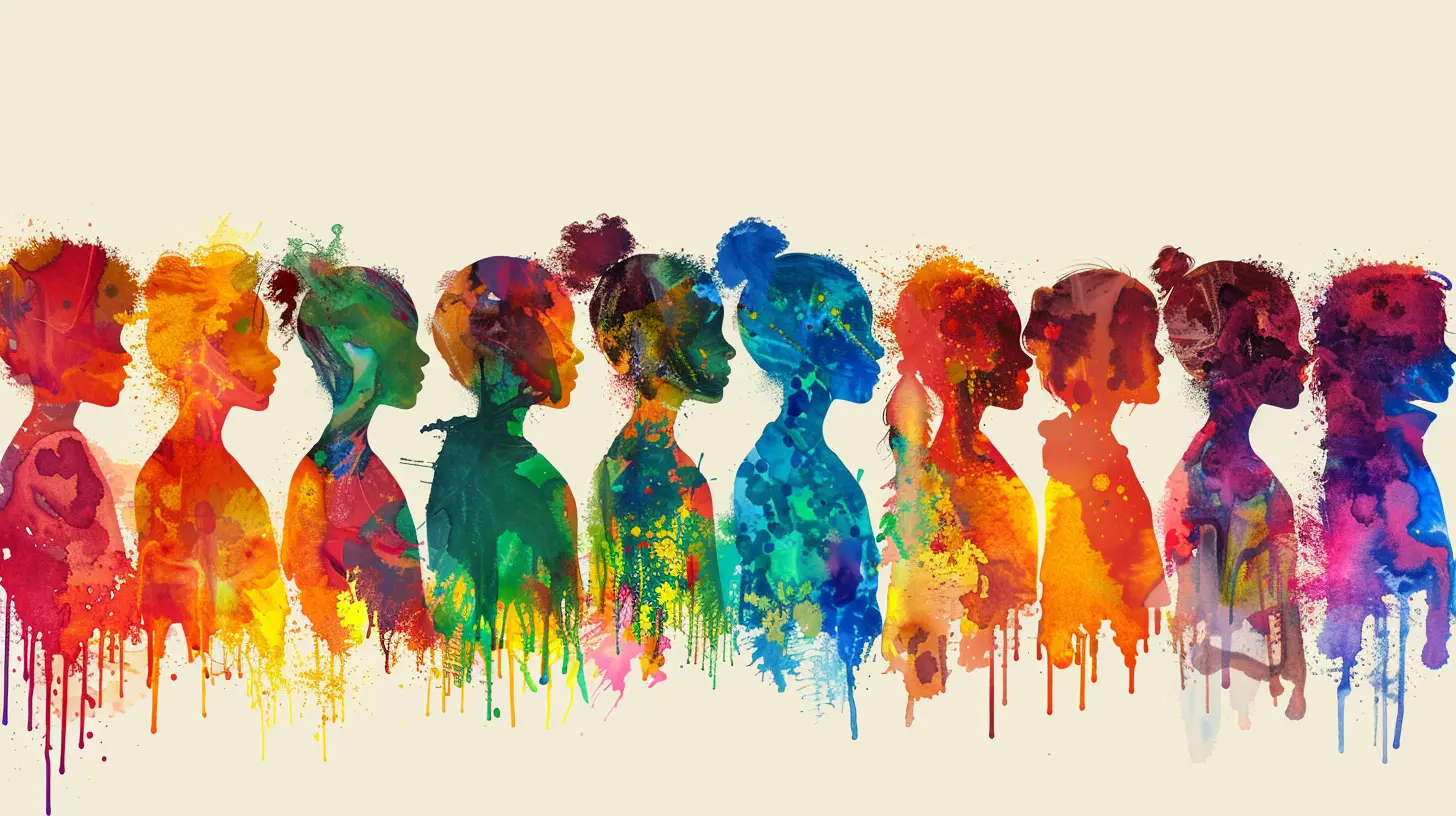
all images in this post were generated using AI tools
Category:
Multicultural EducationAuthor:

Anita Harmon