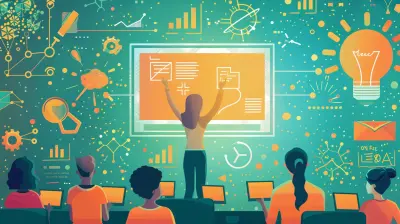
The Intersection of Technology and Open Educational Resources
11 April 2026
Have you ever stopped to think about how much education has changed over the last couple of decades? We’ve moved from chalkboards and textbooks to tablets and digital platforms. But what’s truly transforming education today isn’t just the internet or smart devices—it’s the beautiful blend of technology and Open Educational Resources (OERs). This intersection is shaping the future of how we learn, teach, and share knowledge across the globe.
In this article, we’re going to unpack how this powerful duo is reshaping education. We’ll talk about what OERs really are (in case you’re new to the term), how tech is turbocharging their impact, the benefits and challenges, and what it means for the future of learning.
What Are Open Educational Resources (OERs)?
Let’s start with the basics. Open Educational Resources are teaching, learning, or research materials that are freely available for anyone to use, adapt, and share. Yep, that means no paywalls, no subscriptions, and no hidden costs.Think of them like a massive online buffet of knowledge—you can take what you need, adjust it to your taste, and even pass it along to someone else. OERs can be anything from full courses, textbooks, and lecture notes to quizzes, videos, and even software.
But here’s the kicker: the point of OERs isn’t just access—it’s open access. That means the ability to modify and even remix the content to suit your specific needs. So, if you’re a teacher in Kenya or a college student in Brazil, you're not just consuming material—you’re empowered to create and contribute too.
The Role of Technology in Boosting OERs
Now, let’s bring technology into the picture. If OERs are the content, then technology is the vehicle that delivers them, expands their reach, and enhances their impact. The relationship between the two is kind of like peanut butter and jelly—great on their own, but magic together.1. Easier Access, Anytime, Anywhere
The internet has made education borderless. With a smartphone or laptop and an internet connection, students in remote villages can access the same Harvard-level educational materials as anyone else. Platforms like Khan Academy, Coursera, and OpenStax have been game-changers.2. Personalization and Flexibility
Technology allows OERs to be tailored to individual learning needs. Using adaptive learning tools, educators can customize the learning path based on how a student is performing. So instead of the one-size-fits-all approach, we get education that fits like a glove.3. Collaboration Made Easy
Imagine a classroom without walls. Educators from different parts of the world can collaborate on lesson plans. Students can co-create projects using shared documents or platforms like Google Classroom. This level of interaction was unthinkable just a few years ago.4. Multimodal Learning
Different people learn differently—some are visual learners, some prefer audio, and others just need to see it in action. Thanks to tech, OERs come in multiple formats: videos, podcasts, simulations, infographics, and more. This boosts both engagement and comprehension.
Why This Intersection Matters More Than Ever
So, you might be wondering, “Why all the fuss?” Well, think about the traditional education system—it’s often expensive, rigid, and unevenly distributed. The intersection of technology and OERs is shaking up that model in these powerful ways:1. Democratizing Education
Access to high-quality education shouldn't be a privilege reserved for a lucky few. With OERs amplified by technology, we’re making a serious dent in global education inequality. Students in underfunded schools or developing countries now have access to the same level of content as those in elite institutions.2. Reducing Costs for Students
Textbooks are ridiculously expensive—let’s not sugarcoat it. Students are spending hundreds, even thousands of dollars annually. OERs offer a cost-free alternative that lightens the financial burden without compromising educational quality.3. Encouraging Lifelong Learning
Learning doesn’t stop at the classroom door. Whether you’re a middle-aged professional looking to switch careers or a curious teenager exploring astronomy, technology and OERs empower you to keep learning—on your terms.
Real-Life Examples of Tech-Enhanced OERs in Action
Let’s take a look at what this looks like in the real world.MIT OpenCourseWare
MIT made a bold move by putting virtually all of their course material online—free for anyone to access. And guess what? Millions have benefited, from self-learners to educators redesigning their own courses.Wikipedia
Yep, the giant encyclopedia we all use (probably more than we admit) is one of the biggest examples of an OER project. Developed and maintained by volunteers, it’s a living model of collaborative, technology-powered learning.H5P
Never heard of it? It’s a tool that allows educators to create interactive learning content—like quizzes, timelines, or flashcards—without needing any coding skills. And yes, it's open source.Challenges at the Crossroads
Now, it’s not all sunshine and rainbows. While the combo of tech and OERs is powerful, there are still some bumps in the road.1. Digital Divide
Let’s be honest—not everyone has the same level of internet access or digital literacy. Until we bridge this gap, the full potential of tech-enhanced OERs will remain out of reach for many.2. Quality Control
Since OERs can be created and edited by anyone, ensuring the content is accurate and reliable can be tricky. There’s a need for peer review mechanisms and quality standards.3. Resistance to Change
Some educators and institutions are still wary of embracing open resources. Whether it’s fear, lack of training, or just sticking to what they know, it takes time to shift mindsets.The Future of Education Is Open, Flexible, and Tech-Driven
So, where are we headed from here? The answer is clear: a more open, inclusive, and personalized learning ecosystem.Imagine virtual reality field trips to the pyramids of Egypt, AI tutors adapting in real-time to a student’s performance, and global classrooms where students from every continent learn together in real time. This isn’t science fiction—it’s the unfolding reality at the intersection of technology and OERs.
We’re living in a world where knowledge is no longer locked behind gates. It’s out in the open, waiting to be explored, shaped, and shared. The only limit? Our willingness to participate.
How You Can Get Involved
If this idea has sparked something in you, good! Here’s how you can jump in:- As a student: Start using OERs to supplement your studies. Sites like OER Commons, Coursera, and OpenStax are great places to start.
- As an educator: Create and share your own materials. Remix existing OERs to suit your classroom. Encourage peer collaboration and co-creation.
- As a policymaker or institution: Invest in infrastructure and training. Encourage adoption of OERs to reduce costs and broaden access.
- As a lifelong learner: Dive in and explore subjects that interest you. No deadlines, no tuition—just pure curiosity.
Final Thoughts
The intersection of technology and open educational resources is more than just a trend—it's a movement. A movement toward equity, accessibility, and empowerment in education. While there are still hurdles to overcome, the potential is enormous. And the best part? It’s just getting started.Whether you’re a student, teacher, or just someone passionate about learning, this revolution is something you can be part of. With technology breaking down barriers and OERs opening up possibilities, the future of education doesn't just look different—it looks a whole lot brighter.
all images in this post were generated using AI tools
Category:
Open Educational ResourcesAuthor:

Anita Harmon
Discussion
rate this article
2 comments
Finnian Wilkins
Technology empowers, yet challenges us to rethink access and equity in education.
April 16, 2026 at 2:47 AM
Anita Harmon
Absolutely. Technology can bridge gaps but also highlights disparities. It's crucial we address both to ensure everyone benefits.
Paris McElroy
This article insightfully highlights how technology amplifies the reach and accessibility of Open Educational Resources, fostering inclusive learning environments and empowering educators and students to collaborate globally.
April 14, 2026 at 5:01 AM
Anita Harmon
Thank you! I'm glad you found the article highlights the positive impact of technology on Open Educational Resources. Embracing these tools truly enhances collaboration and inclusivity in education.