Rethinking Traditional Education Models for a Changing World
22 March 2026
Education has been the backbone of human progress for centuries. But let’s be honest—our traditional education system is outdated. It was designed for the industrial age, yet we’re living in the digital age. The world is evolving at a breakneck pace, and our schools? Not so much.
So, is it time to rethink traditional education models? Absolutely! In this article, we’ll dive into why the current system isn’t keeping up, what changes are needed, and how we can better prepare students for the future.

The Problem with Traditional Education
1. One-Size-Fits-All Approach
Picture this—you’re in school, sitting in a classroom with 30 other students, all expected to learn at the same pace. But wait! Some students grasp concepts faster, while others need more time. Yet, the system treats everyone the same.This cookie-cutter approach leaves many students struggling or, worse, disengaged. Education should be about fostering curiosity and critical thinking, not just memorizing facts to ace a test.
2. Overemphasis on Standardized Testing
Speaking of tests—why is success still measured by standardized exams? These tests often don’t reflect a student's true potential. Some people excel at problem-solving, creativity, or leadership, but traditional tests don’t measure those skills.Instead of nurturing diverse talents, we’re pushing students to cram information, regurgitate it for exams, and then promptly forget everything. It’s like training for a marathon by only running sprints—it just doesn’t prepare you for the bigger picture.
3. Lack of Real-World Skills
How often did you use the Pythagorean theorem today? Probably never. But skills like financial literacy, emotional intelligence, and communication? Those are crucial in everyday life.Yet, traditional schooling spends years drilling complex math and historical dates into students while ignoring vital life skills. Shouldn’t schools prepare students for real-world challenges like managing money, handling stress, and navigating relationships?
4. Rigid Learning Structures
Let’s face it—people learn in different ways. Some excel through hands-on experiences, while others absorb information visually or through storytelling. Yet, traditional schools rely heavily on lectures and textbooks, making it tough for many students to engage and retain knowledge.Ever wondered why kids can memorize every detail of a video game but struggle with history lessons? It’s all about engagement! If learning was more interactive and personalized, students would be far more excited to participate.

Rethinking Education: What Needs to Change?
1. Personalized Learning
Imagine a classroom where students learn at their own pace, using methods that suit them best. With technology like AI-driven learning platforms and personalized curriculums, this is entirely possible.Adaptive learning tools can assess students' strengths and weaknesses, offering tailored lessons that help them grasp concepts more effectively. Think of it like Netflix recommending shows based on your watch history—except it’s education adapting to individual needs!
2. Focus on Skills That Matter
We need to shift the focus from rote memorization to practical skills. This means integrating subjects like:- Financial Literacy – Teaching kids how to budget, save, and invest.
- Critical Thinking & Problem-Solving – Encouraging students to question and analyze rather than blindly follow.
- Communication & Collaboration – Preparing them for teamwork and leadership roles.
- Emotional Intelligence – Helping students manage emotions and build strong relationships.
These skills are crucial for success in the modern world, yet they’re often sidelined in traditional education.
3. Embracing Technology in Learning
Technology isn’t just about screen time and video games—it’s a powerful tool for education. Virtual classrooms, AI tutors, gamified learning, and online courses provide more flexibility and engagement than traditional methods.For example, platforms like Khan Academy, Duolingo, and Coursera allow students to learn at their own pace, anytime and anywhere. Why limit education to four walls when knowledge is just a click away?
4. Project-Based Learning
Learning becomes meaningful when students apply knowledge to real-world challenges. Instead of memorizing facts, why not let students work on projects that solve actual problems?Think about how startups and businesses operate—they tackle challenges, brainstorm solutions, and experiment. Schools should adopt this approach, allowing students to work on hands-on projects that develop problem-solving and creativity.
5. Flexible Learning Paths
Not every student is destined for college, and that’s okay! Traditional education often pushes a "college or failure" mindset, but the truth is, there are many paths to success.Vocational training, apprenticeships, and entrepreneurship programs need more recognition. Not everyone needs a four-year degree; many careers thrive on skills and experience rather than formal education.
The Future of Education: A Hybrid Model
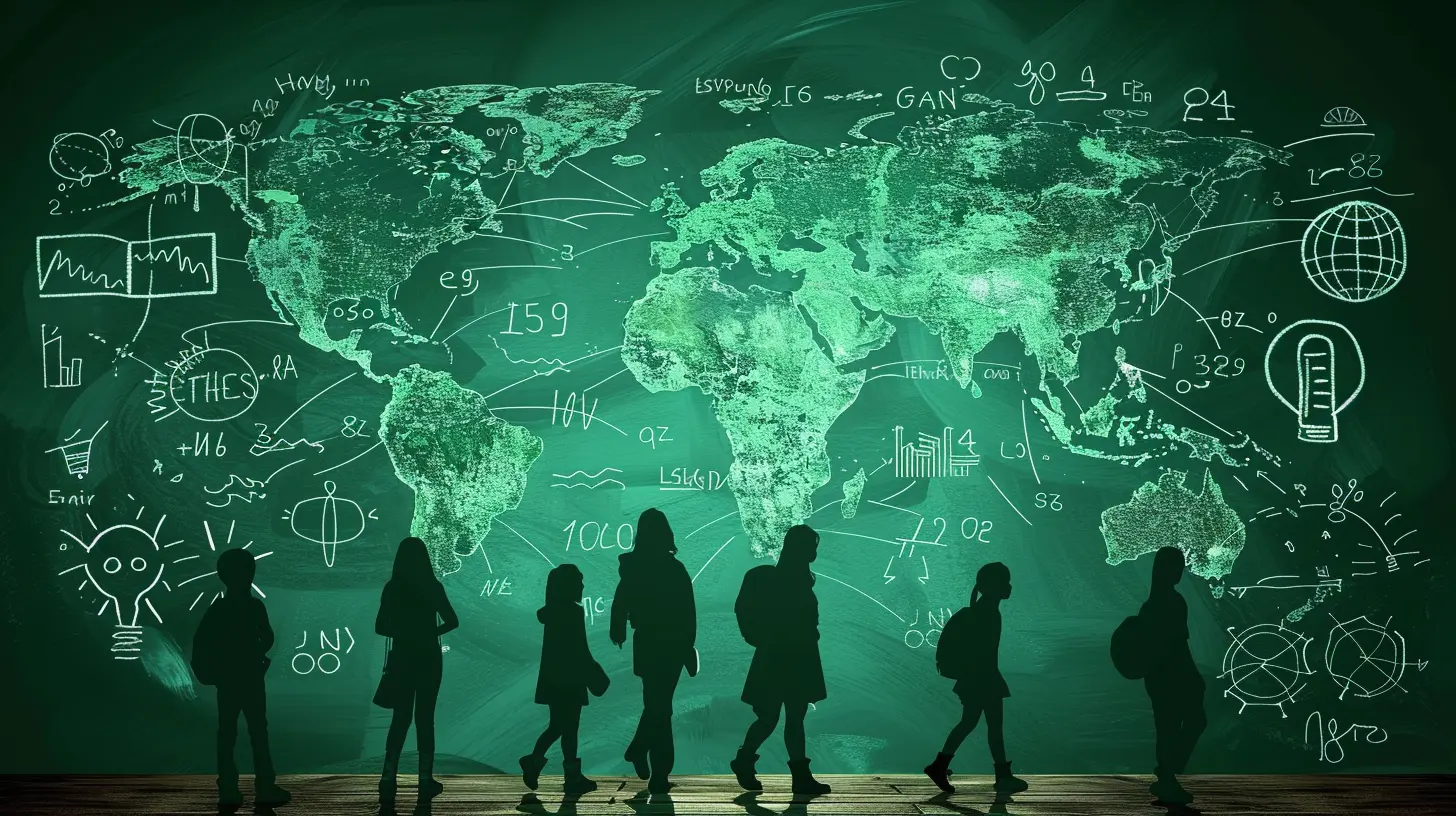
So, what’s the solution? A hybrid model—a mix of traditional and modern education methods. Imagine a system where students:- Learn core subjects but also develop real-world skills.
- Have access to digital resources alongside traditional classrooms.
- Work on creative projects while also studying foundational concepts.
- Choose flexible career paths instead of being forced into a one-size-fits-all system.
This approach ensures students are well-rounded, adaptable, and ready for the future.

Final Thoughts
The world is changing, and education must evolve with it. Sticking to outdated methods is like using a typewriter in the age of smartphones—it just doesn’t make sense anymore.Education should inspire, engage, and prepare students for real-life success. That means rethinking how we teach, what we teach, and how students learn. If we embrace personalized learning, practical skills, technology, and flexible paths, we can build a system that truly supports future generations.
So, what’s next? It’s time for educators, policymakers, and society as a whole to push for meaningful change. The future of education isn’t about sticking to old methods—it’s about creating a system that works for everyone.
all images in this post were generated using AI tools
Category:
Education ReformAuthor:

Anita Harmon
Discussion
rate this article
2 comments
Juno Lee
This article presents a timely perspective on education's evolution. Embracing innovative approaches while valuing foundational knowledge can create a more adaptable and relevant learning environment, preparing students effectively for the challenges of the future.
March 28, 2026 at 3:57 AM
Anita Harmon
Thank you for your insightful comment! I completely agree that blending innovation with foundational knowledge is key to preparing students for future challenges.
Indigo Daniels
This article compellingly highlights the need for educational reform in response to our rapidly changing world. By integrating innovative teaching strategies and technology, educators can better prepare students for future challenges. Embracing a more flexible and inclusive approach to learning will ultimately enhance student engagement and success.
March 23, 2026 at 12:54 PM
Anita Harmon
Thank you for your insightful comment! I wholeheartedly agree that embracing innovative strategies and inclusivity is essential for preparing students for the future.