How Cultural Diversity Enhances Critical Thinking
30 November 2026
Most people treat critical thinking as a solo skill. You sit down, weigh the evidence, spot the logical fallacies, and reach a sound conclusion. That picture is incomplete. The quality of your thinking depends heavily on the range of perspectives you have been exposed to. A room full of people who share the same assumptions will produce confident conclusions and miss obvious blind spots. A room that includes people who grew up with different norms, languages, and reasoning habits will surface questions nobody else thought to ask.
This is not a feel-good claim about inclusion. It is a practical observation about how human reasoning actually works. Cultural diversity, when handled well, gives thinking a wider set of inputs, more friction against lazy assumptions, and a richer menu of ways to frame a problem. When handled badly, it produces confusion and conflict without insight. The difference lies in how deliberately we use diversity as a thinking tool rather than merely celebrating it as a value.
This article breaks down the mechanisms behind that claim, shows where the benefits are real and where they are oversold, and offers concrete ways to turn cultural difference into better judgment.

What Critical Thinking Actually Requires
Before connecting diversity to thinking, it helps to be precise about what critical thinking involves. It is not cynicism, and it is not the habit of disagreeing with everything. It is a disciplined process with several moving parts.First, it requires identifying your own assumptions. Much of what we believe feels obvious rather than learned. Critical thinking starts when you notice that "obvious" is often just "familiar."
Second, it requires generating alternative explanations. A single hypothesis is rarely enough. Good thinkers hold several possible interpretations open before settling.
Third, it requires evaluating evidence fairly, including evidence that contradicts what you prefer to be true. This is where most of us fail, not from lack of intelligence but from lack of exposure to competing views.
Fourth, it requires perspective taking, the ability to reason from a standpoint other than your own. This is the hardest part and the one most directly served by cultural diversity.
Each of these steps depends on material you have available. You cannot consider an alternative you have never encountered. You cannot spot an assumption you have never seen challenged. Diversity supplies that material.

The Core Mechanisms: Why Diversity Improves Reasoning
The link between cultural diversity and critical thinking is not mystical. It operates through several identifiable mechanisms. Understanding them helps you design environments where the effect actually shows up.Exposure to different reasoning styles
Cultures differ in how people prefer to argue and decide. Some lean toward direct confrontation of ideas. Others favor indirect communication and consensus building. Some prioritize formal logic and explicit evidence. Others weigh context, relationships, and narrative more heavily.None of these styles is inherently superior. Each has blind spots. A purely confrontational style can miss relational costs and alienate people whose cooperation matters. A purely harmony-oriented style can suppress necessary disagreement and let bad ideas survive unchallenged. When people with different defaults work together, each style gets tested against the other. The result, done well, is a hybrid approach that is more robust than either default alone.
Cognitive friction as a feature
Working across cultural difference is mentally effortful. You cannot rely on autopilot because the usual cues and shortcuts do not apply. That effort is uncomfortable, and it is also the point. Effortful processing is where deeper reasoning happens. When you have to explain why a norm exists, you either find a real justification or you discover there was not one. Both outcomes sharpen thinking.The trade-off is real. Cognitive friction slows groups down and can increase frustration. Teams that rush to eliminate it by enforcing a single dominant style often lose the very benefit they were trying to preserve. The practical answer is to protect some friction while giving people enough shared ground to work productively.
Assumption surfacing
Cultural difference is one of the most reliable ways to make hidden assumptions visible. If everyone in the room assumes that a meeting should start on time with a fixed agenda, nobody questions it. Add colleagues for whom relationship building precedes business, and the assumption becomes an explicit choice rather than an invisible default. That shift from invisible to explicit is exactly what critical thinking requires.Broader information pools
People from different backgrounds often have different knowledge, different networks, and different experiences of how systems work. This expands the raw material available for problem solving. In product design, it means catching use cases the core team never imagined. In policy work, it means anticipating how a rule will land in communities the drafters do not belong to. The value is not that diverse people are smarter. It is that they have access to information the homogeneous group lacks.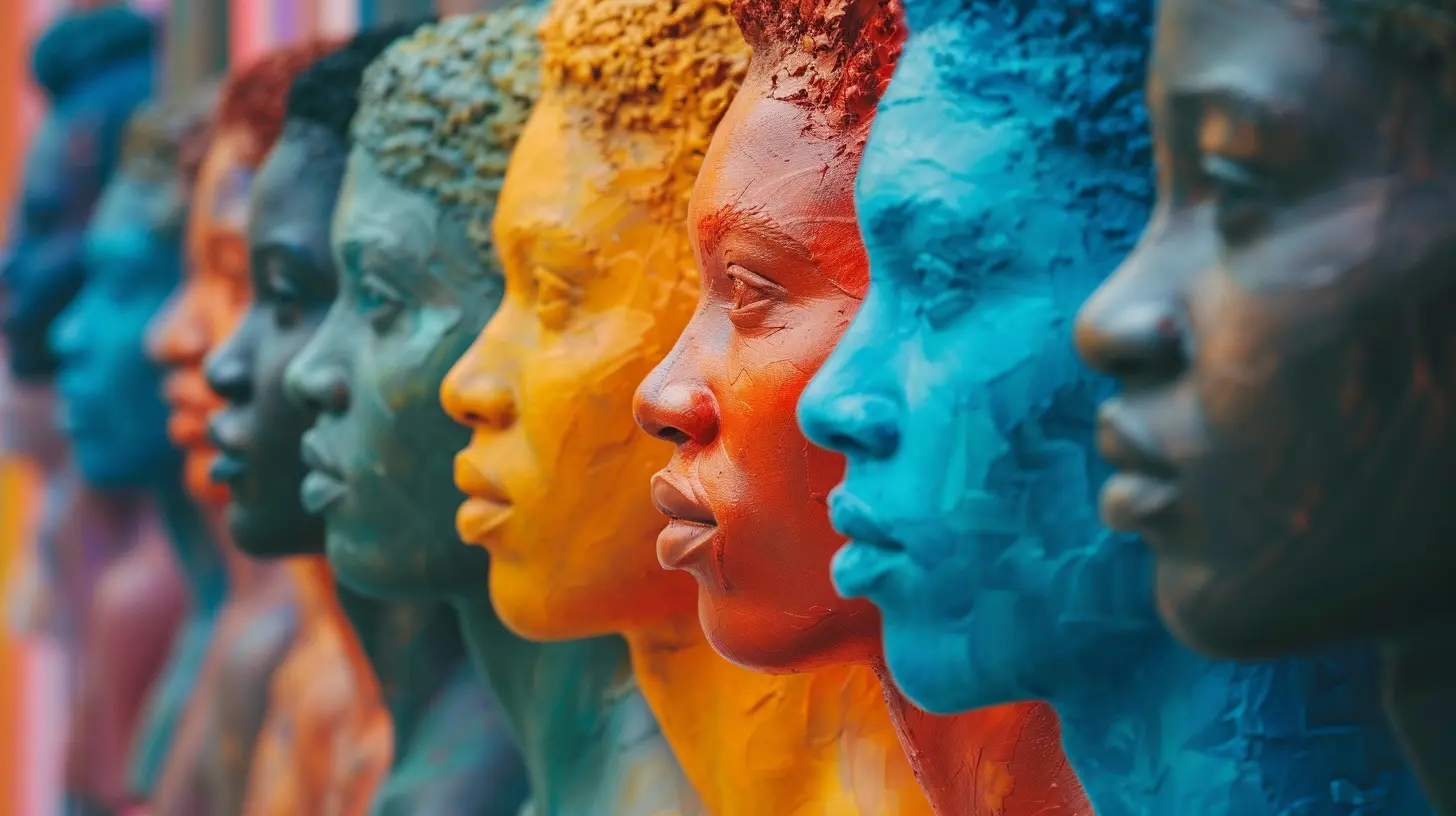
The Research Picture, Stated Carefully
It is tempting to overstate the evidence. The honest position is that the relationship between diversity and performance is real but conditional. Studies of group problem solving have generally found that diverse groups can outperform homogeneous ones on certain tasks, particularly those requiring creativity, the generation of alternatives, and the avoidance of shared blind spots. The same research also shows that diverse groups often experience more conflict and lower satisfaction in the short term.That combination matters. It means diversity is not a free upgrade. It is an investment with upfront costs and delayed, conditional returns. Groups that manage the conflict well capture the upside. Groups that do not get the friction without the benefit.
There is also a well-documented risk of "surface-level" diversity being treated as a box to tick while deeper differences in viewpoint are suppressed. If an organization hires people from many backgrounds but expects them all to think and communicate in one approved way, the cognitive benefit largely evaporates. Diversity of identity does not automatically produce diversity of thought. The bridge between them has to be built deliberately.

Where the Effect Is Strongest
Cultural diversity tends to pay off most in specific kinds of work. Knowing where it matters helps you invest effort proportionally.Complex, ambiguous problems. When a problem has no established solution, a wider range of framings is valuable. Strategic planning, research and development, and public policy are good examples.
Work with diverse end users. If a product or service serves people from many backgrounds, a team that reflects that variety is more likely to catch mismatches between assumptions and reality.
Creative and design work. Generating many options benefits from many starting points. Cultural difference is a reliable source of starting points.
High-stakes decisions with known failure modes of groupthink. When a group is prone to converging too quickly, deliberately varied perspectives act as a check.
The effect is weaker, and sometimes negative, in work that demands tight coordination, strict standardization, or rapid execution under a single clear protocol. A surgical team mid-operation does not benefit from debating cultural approaches to hierarchy. The time for that discussion is in planning and training, not in the moment. Matching the tool to the task is part of using it well.
Common Mistakes and Misconceptions
The gap between the promise of diversity and its frequent disappointment usually comes down to a handful of avoidable errors.Treating diversity as automatic
The most common mistake is assuming that bringing different people together will, by itself, improve thinking. It will not. Without structures that invite genuine input, difference gets smoothed over or ignored. The benefit comes from what you do with the difference, not from its mere presence.Confusing identity with viewpoint
People from the same cultural background can think very differently, and people from different backgrounds can think alike. Assuming that a person's background predicts their every opinion is both inaccurate and patronizing. Use cultural difference as a prompt to ask more questions, never as a shortcut to knowing what someone thinks.Mistaking politeness for inclusion
Many organizations pride themselves on being courteous across differences while quietly rewarding conformity. If the only voices that shape decisions come from one cultural style, the diversity is decorative. Real inclusion means the reasoning process itself is influenced by multiple perspectives, not just the headcount.Letting conflict run unmanaged
The opposite failure is allowing cross-cultural friction to fester without facilitation. Disagreement about ideas is productive. Disagreement that turns personal, or that gets read through a lens of cultural disrespect, is corrosive. Skilled facilitation, clear norms, and a shared commitment to examining ideas rather than people make the difference.Overcorrecting into relativism
A subtler error is concluding that because cultures differ, all claims are equally valid and nothing can be judged. That is not critical thinking. It is its abandonment. Cultural diversity should expand the range of considerations, not suspend the obligation to weigh evidence and reason carefully. You can take another perspective seriously without pretending every perspective is equally well supported.
Practical Approaches for Individuals
If you want to use cultural diversity to sharpen your own thinking, you do not need a formal program. A few habits go a long way.Deliberately seek out the "dissenting" view. When you form a conclusion, ask who is most likely to disagree and why. If you can find someone from a different background willing to explain their reasoning, listen for the logic rather than preparing your rebuttal.
Ask about the "why" behind norms. When something feels odd or inefficient, resist the urge to judge. Ask what problem the practice solves in its original context. You will often find a reasonable answer, and occasionally you will find that your own default solves a problem you had not noticed.
Read and watch beyond your usual sources. Deliberate exposure to media, literature, and commentary from other cultural contexts widens your inventory of framings. This is not about agreeing with everything you encounter. It is about having more options available when you reason.
Notice your discomfort as a signal. When a perspective unsettles you, that is worth examining. Sometimes the discomfort points to a genuine flaw in the other view. Sometimes it points to an assumption you had never questioned. Distinguishing between the two is the work.
Practice explaining your own reasoning out loud. Cross-cultural settings expose how much of your thinking relies on unstated context. Getting in the habit of making your reasoning explicit improves it even when you are alone.
Practical Approaches for Teams and Organizations
At the group level, the design of the environment matters more than individual goodwill.Set norms that make difference safe to express. Explicitly invite disagreement with ideas, distinguish it from personal attack, and model it from the top. People from cultures where open disagreement is risky will not offer it just because a policy says they can.
Use structured formats. Round-robin input, written pre-reads, and anonymous idea collection all reduce the advantage held by the most culturally dominant communicators. Structure gives quieter or differently styled contributors a reliable channel.
Rotate who frames the problem. The person who defines the question controls much of the answer. Rotating that role across cultural perspectives changes what gets noticed.
Separate idea generation from evaluation. In the generation phase, reward variety. In the evaluation phase, apply consistent criteria. Mixing the two tends to let the loudest cultural style win both.
Train for it, do not just hope for it. Facilitation skills, cross-cultural communication, and the ability to disagree productively are learnable. Treating them as assumed competencies is a common reason diverse teams underperform.
Measure whether input actually changes decisions. If you cannot point to decisions that were altered by perspectives from outside the dominant group, the diversity is not yet doing cognitive work.
Trade-Offs Worth Acknowledging
Honest treatment of this topic requires naming the costs. Diverse teams often take longer to reach decisions. They can experience more interpersonal friction. They require more skilled leadership. In the short term, a homogeneous team with a shared style may look more efficient.That efficiency is real, and sometimes it is the right call. For routine, well-understood tasks with clear protocols, a tight homogeneous team can be perfectly effective. The case for diversity is strongest where the cost of a shared blind spot is high, where creativity matters, and where the problem is complex enough that no single framing will do.
The mature position is not that diversity always wins. It is that diversity is a powerful input to critical thinking whose benefits are conditional on how it is managed, and whose costs are real and should be planned for rather than wished away. Leaders who understand both sides make better choices about when and how to invest in it.
Bringing It Together
Cultural diversity enhances critical thinking because it supplies what good thinking needs: alternative framings, visible assumptions, varied evidence, and practice at perspective taking. It does this not automatically but through mechanisms that can be designed for or neglected. The difference between a diverse group that thinks well and one that merely looks diverse is intentional structure, skilled facilitation, and a genuine willingness to let outside perspectives change the conclusion.For individuals, the takeaway is to seek difference deliberately and treat discomfort as information. For organizations, it is to build the conditions under which difference can do its work, and to be honest about the costs. Neither path is effortless. Both are worth it, because the alternative is a confident mind that has never been tested against anything but its own reflection.
all images in this post were generated using AI tools
Category:
Multicultural EducationAuthor:

Anita Harmon