How Cognitive Science Can Enhance Language Learning
9 October 2026
Ever wondered why some people pick up new languages like it's a hobby, while others struggle with simple phrases for years? It's not just about practice or exposure. There's something deeper going on—and that's where cognitive science steps in. The way our brains process, store, and retrieve information plays a massive role in how effectively we learn languages.
In this post, we’re diving headfirst into how cognitive science—the study of the mind and its processes—can supercharge your language learning journey. So grab your mental passport, because this is going to be one enlightening ride.
What Is Cognitive Science, Anyway?
Let’s break it down. Cognitive science is an interdisciplinary field that mixes psychology, neuroscience, linguistics, computer science, philosophy, and anthropology to understand how the human mind works. Think of it as the ultimate team-up of brainy subjects trying to decode… well, your brain!So when we talk about enhancing language learning with cognitive science, we’re really asking: “How does the brain really learn languages—and how can we use that info to learn better and faster?”
The Brain’s Language Centers: A Quick Peek Inside
Before we dive into the practical stuff, let’s look under the hood.- Broca’s Area: This part helps you produce speech. Located in the frontal lobe, it’s like your internal translator.
- Wernicke’s Area: This guy’s responsible for understanding language. It’s in the temporal lobe and acts like your personal language decoder.
- The Hippocampus: The memory bank. This region helps you store new vocabulary and grammar rules.
Understanding these areas is important because enhancing language learning isn’t about grinding for hours—it’s about targeting these brain regions effectively.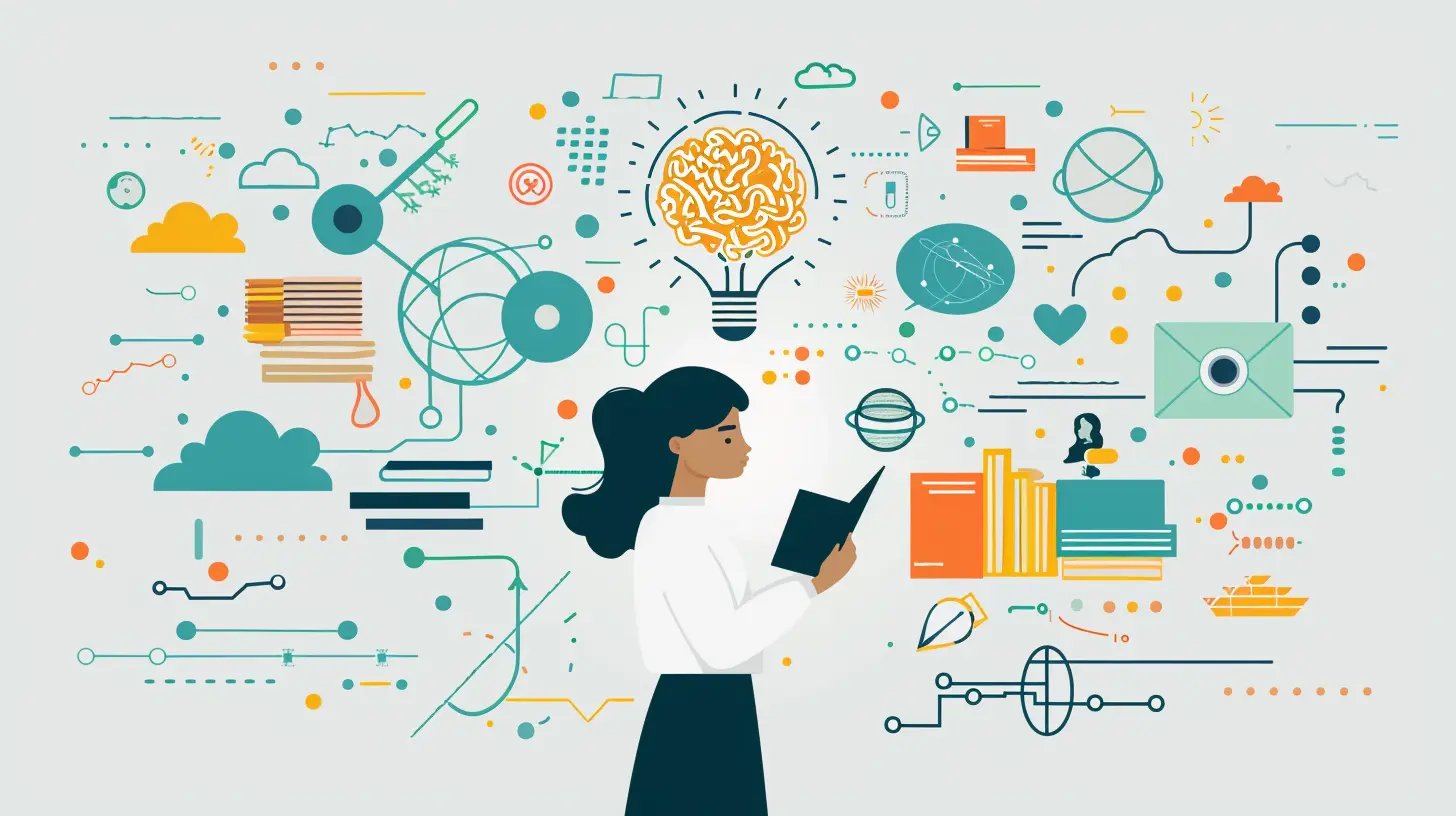
Memory: The Backbone of Language Learning
Let’s be honest—languages are mostly about memory. Vocabulary lists, grammar rules, pronunciation, idioms. It’s a lot to take in.Here’s how cognitive science helps:
1. Chunking Information
Ever tried to memorize a phone number? It’s easier as “555-123-4567” than “5551234567,” right? That’s chunking. Your brain likes to process small, meaningful groups.? Language Hack: Group vocabulary into themes (e.g., food, travel, emotions). Your brain will love the structure.
2. Spaced Repetition
You’ve probably heard of flashcards. Now add time and science.Cognitive studies show that reviewing info at spaced intervals turns short-term memory into long-term knowledge. Apps like Anki and Memrise are based on this principle.
? Think of it as giving your brain a gentle nudge at just the right time.
3. Retrieval Practice
Don’t just reread stuff. Quiz yourself. Recall strengthens memory way more than passive review. It's like doing mental push-ups for your vocabulary.
Attention and Focus: Why Multitasking Is Your Enemy
Here’s the hard truth: the human brain stinks at multitasking. Especially when learning something complex like a language.Cognitive science tells us that focused attention is required to encode new information effectively. Translation? Turn off your phone when studying. Avoid background TV. Give your brain the space to do its job.
? Tip: Try the Pomodoro Technique—25 minutes of focused study, 5-minute break. It’s productivity gold.
The Role of Emotion in Language Learning
Did you know that your emotions can turbocharge—or totally sabotage—your ability to learn a language?Here’s why:
- Positive emotions like excitement and curiosity increase dopamine, which helps the brain absorb and retain info.
- On the flip side, stress and anxiety (test anxiety, anyone?) reduce your working memory capacity, making it harder to concentrate and recall what you’ve learned.
? Mental Tip: Connect language learning with things you love. Watch foreign films, follow music with lyrics, or even cook using recipes in your target language.
Cognitive Load: Don’t Overwhelm Your Brain
Ever feel like your brain just can’t take in one more grammar rule? That’s cognitive load talking.Cognitive load theory says our working memory can only handle so much at once. Piling on too much info—especially without structure—leads to burnout and zero absorption.
Reduce It By:
- Breaking lessons into digestible chunks.- Focusing on one skill at a time (reading, speaking, etc.).
- Using visuals like infographics or mind maps.
? Think of your brain like a sponge—it can absorb only so much water at a time before it starts leaking.
Input and Output: The Learning Cycle
Cognitive models of language acquisition stress a balance between input (listening + reading) and output (speaking + writing).Too many learners focus only on passive input—watching Netflix with subtitles doesn’t mean you’re fluent!
Tip:
- Practice active listening—take notes, repeat phrases out loud, predict what’ll be said next.- Speak from Day One. Even if it’s broken, messy, or sounds like a toddler’s babble. Output builds neural connections!
Think of input as your fuel and output as your engine. They work best together.
The Power of Metacognition: Thinking About Thinking
Meta-what-now? ?Metacognition is your ability to reflect on how you learn—and adapt it accordingly.
For example:
- Are you a visual learner? Use charts and color-coded notes.
- Do you remember better by hearing? Record yourself and listen to it.
- Is your progress stalled? Change your method.
By being aware of your learning habits, you can consciously tweak your strategies to match what works best for your brain.
? Self-awareness = faster learning. Period.
Language Transfer and Interference
Ever tried to speak in a new language but your first language keeps creeping in? That’s language transfer—and it can either help or hinder you.- Positive Transfer: When similar words or grammar help you learn faster. (Spanish and Italian learners, you get a head start!)
- Negative Transfer (Interference): When your native language messes with the new language’s rules. (Why do Germans always say "the child plays with the ball at the park"?)
Cognitive science helps identify these pain points so teachers and learners can address them head-on.
Multisensory Learning: Engage More of Your Brain
The more senses you use, the more brainpower you tap into.- See: Flashcards, images, subtitles.
- Hear: Songs, podcasts, dialogues.
- Speak: Repeat, shadow, mimic.
- Touch: Write by hand, gesture, use language-based games.
Using multiple senses strengthens the neural pathways involved in language learning. It’s like building a mental superhighway instead of a narrow footpath.
The Social Side of Cognitive Learning
Human beings are wired for social interaction. And guess what? Language is inherently social.Cognitive science shows that learning in social contexts—group classes, language exchanges, peer correction—boosts retention and motivation.
? Tip: Join a language partner app or local meetup. Learning from/with others adds accountability and makes it fun.
Sleep and Language Learning: Don’t Skip the Zzz’s
Your brain doesn’t stop learning when you sleep. In fact, it’s when consolidation (a fancy word for turning short-term memories into long-term ones) kicks into high gear.Cognitive research reveals that skipping sleep can:
- Reduce memory retention
- Impair concentration
- Increase forgetting
?️ So yeah, staying up late cramming vocab might actually hurt more than help.
Technology and Cognitive Science: A Perfect Pair
Apps like Duolingo, Babbel, and Rosetta Stone aren’t just trendy—they’re built on cognitive science principles. Features like spaced repetition, interleaved practice, and gamification target your brain’s learning zones.But don’t just rely on apps. Combine them with speaking practice, reading real-world content, and writing exercises for a full-on brain workout.
Final Thoughts: Ditch the Myths, Use the Science
Language learning isn’t about being “naturally gifted” or having the “language gene.” It’s about understanding how your brain learns best—and using that knowledge to your advantage.Thanks to cognitive science, we’ve got a roadmap:
- Work with your memory, not against it.
- Manage your attention and emotional state.
- Use metacognition to guide your learning.
- Balance input and output.
- Sleep, focus, and repeat!
Think of it this way: your brain is a complex instrument. Cognitive science is the user manual you never knew you needed.
So next time you're stuck conjugating irregular verbs or choking on pronunciation, take a deep breath—and remember, your brain’s got your back. You just need to give it the right tools.
all images in this post were generated using AI tools
Category:
Second Language AcquisitionAuthor:

Anita Harmon