Advancing Equity Through Multicultural Curriculum Design
12 October 2026
Education has always carried a quiet promise: that every child who walks through the door will find something that speaks to them. When that promise holds, classrooms hum with purpose. When it breaks, students drift, disengage, and sometimes conclude that school was never meant for them. Multicultural curriculum design is one of the most practical tools we have for keeping that promise alive. It is not a slogan, a holiday calendar, or a single unit bolted onto an existing syllabus. It is a way of thinking about what we teach, why we teach it, and who gets to see themselves in the material.
This article is for teachers, curriculum leaders, instructional designers, and administrators who want to move past good intentions and into work that actually changes what students experience. We will look at what multicultural curriculum design really means, why it matters, how to do it well, where it commonly goes wrong, and how to tell whether it is working.

What Multicultural Curriculum Design Actually Means
At its core, multicultural curriculum design is the deliberate structuring of content, materials, assessments, and instructional methods so that multiple cultural perspectives are represented, respected, and used as resources for learning. That definition sounds simple. The practice is not.A multicultural curriculum is not the same as a diverse reading list. Adding three books by authors of color to a literature course can be a meaningful step, but it is not curriculum design. Design implies architecture. It means thinking about how units connect, how knowledge is framed, whose questions drive inquiry, and how students are asked to demonstrate understanding.
James Banks, a foundational scholar in this field, described several levels of integration. At the lowest level, teachers add occasional cultural content, often around holidays or heritage months. At higher levels, the curriculum is transformed so that students examine concepts, issues, and events from multiple viewpoints and use that examination to build critical thinking. The highest level asks students to make decisions and take action on social issues they have studied. This progression is useful because it gives educators a way to self-assess honestly. Most schools, if we are candid, sit somewhere near the lower rungs. The goal is not to leap to the top overnight but to move deliberately upward.

Why This Work Matters More Than Ever
Student populations in many countries are more culturally, linguistically, and religiously varied than at any point in modern history. Meanwhile, the canon of what counts as "important knowledge" has often remained stubbornly narrow. That gap has consequences.When students rarely encounter their own communities in the curriculum, several things can happen. They may disengage because the material feels irrelevant. They may internalize the message that their history is peripheral. Or they may succeed academically while quietly learning that success requires leaving part of themselves outside the classroom door. None of these outcomes is acceptable.
There is also a civic dimension. Schools prepare people to live in a shared society. If students only ever study one cultural tradition in depth, they are poorly equipped for workplaces, neighborhoods, and democracies that require understanding across difference. Multicultural curriculum design is not about lowering standards. It is about raising the ceiling on what students can understand and do.
The Difference Between Celebration and Transformation
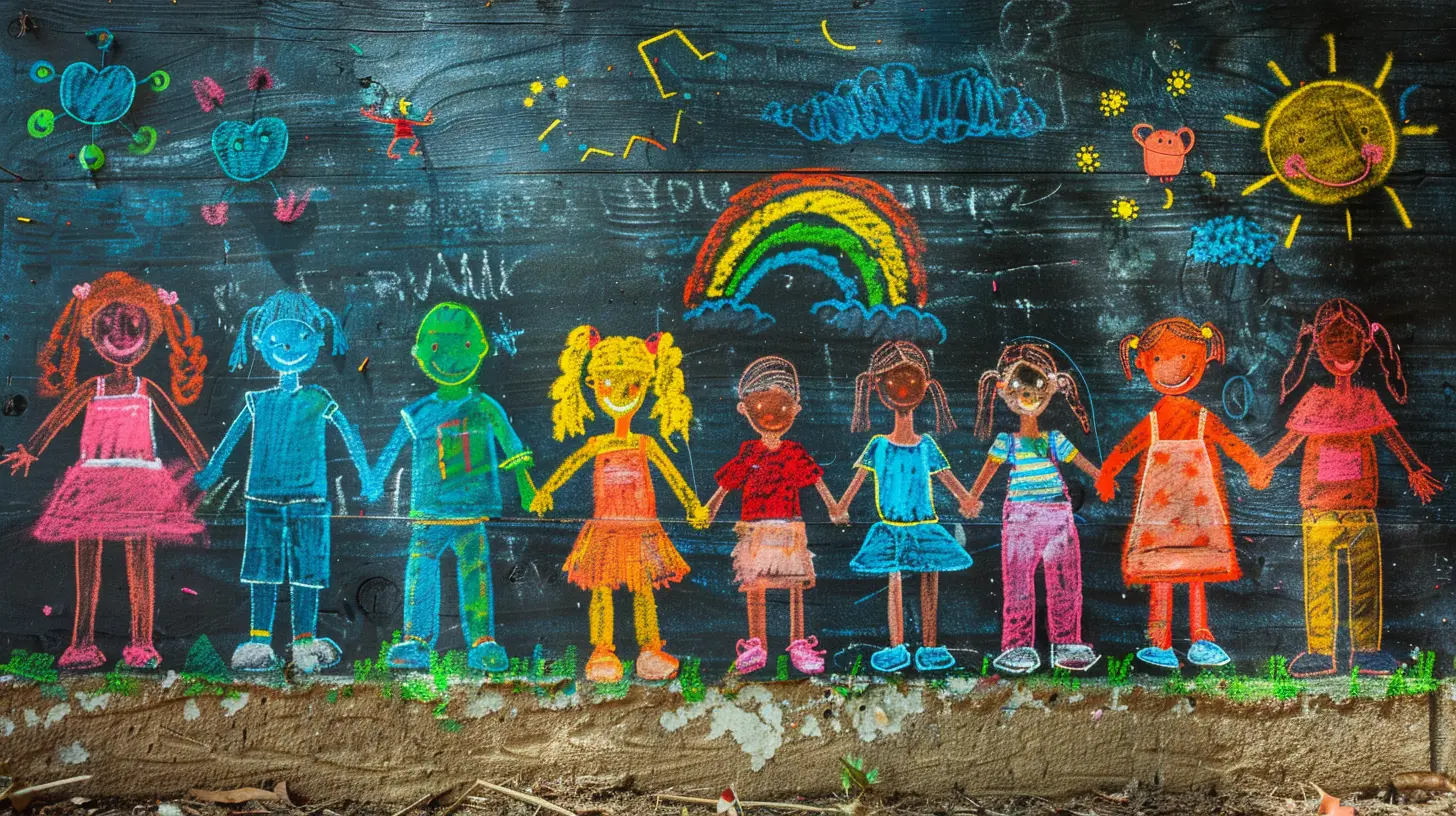
Many schools begin with celebrations. A bulletin board for Black History Month. A Lunar New Year assembly. A unit on Indigenous peoples in November. These gestures are not worthless. They can signal that a school values its community and can open conversations that were previously absent.But celebration without transformation creates a familiar trap. It treats culture as a special occasion rather than a living framework for understanding the world. It can also flatten complex communities into food, festivals, and folklore, which is a subtle form of disrespect.
Transformation looks different. In a transformed curriculum, students might study the same historical event through three different primary sources and analyze why the accounts diverge. They might examine how a scientific concept was understood in different traditions before converging on a modern consensus. They might read a novel alongside the historical context that shaped its author's choices. The content changes, but so does the intellectual work. Students are not just receiving information. They are learning to interrogate it.

Practical Principles for Designing a Multicultural Curriculum
Theory is useful only when it lands in a lesson plan. Here are principles that hold up in real classrooms.Start With Learning Goals, Not With Content
A common mistake is to begin by asking which diverse texts or topics to add. That approach leads to a patchwork. A stronger start is to ask what you want students to understand and be able to do by the end of the unit. Once the goals are clear, you can choose content that serves them, including content from multiple cultural traditions.For example, if the goal is for students to analyze how power shapes historical narratives, you do not need a specific set of texts. You need sources that allow meaningful comparison. That flexibility is liberating. It means you can design strong units even when your available materials are limited.
Use Culturally Sustaining, Not Just Culturally Relevant, Content
Culturally relevant teaching connects content to students' backgrounds. Culturally sustaining teaching goes further by actively maintaining and extending students' cultural and linguistic practices rather than treating them as a bridge to something supposedly better. The distinction matters. Relevance can be temporary. Sustaining is ongoing.In practice, this might mean allowing students to write in multiple languages, validating oral storytelling traditions alongside written analysis, or inviting families to contribute local knowledge that becomes part of the curriculum rather than a one-time guest appearance.
Balance Windows and Mirrors
Students need mirrors, which reflect their own experiences, and windows, which open onto experiences different from their own. A curriculum that offers only mirrors can become insular. One that offers only windows can leave some students permanently outside the frame. The goal is a thoughtful mix across the year, not necessarily in every single lesson.Build In Multiple Entry Points
Multicultural curriculum design aligns naturally with universal design for learning. When you offer content in varied formats, allow different ways to demonstrate understanding, and provide choices that respect student interest, you make learning more accessible without diluting rigor.Plan for Discomfort
Discussing culture, power, and history can surface strong emotions. That is not a reason to avoid the work. It is a reason to prepare for it. Establish discussion norms early. Practice handling disagreement with respect. Give students low-stakes ways to process difficult material before asking them to speak publicly. Teachers who plan for discomfort handle it far better than those who hope it will not arise.Real-World Examples That Work
Abstract principles become clearer with concrete illustrations. These examples are composites drawn from common practice, and they can be adapted across grade levels.A History Unit on Migration
Instead of a single narrative of immigration to one country, a teacher designs a unit that examines migration through multiple lenses: economic push and pull factors, family separation, language acquisition, and the ways host communities respond. Students read first-person accounts from different eras and regions, analyze policy documents, and interview a family member or community member about their own migration story, if they choose. The unit ends with students proposing a policy recommendation and defending it with evidence.Why this works: it teaches transferable analytical skills while making room for personal connection. It also avoids presenting any single group as the default subject of history.
A Science Unit on Water
A science teacher builds a unit around water quality and access. Students study the chemistry of water, then examine how different communities have managed water historically and today. They compare engineered solutions from different regions and evaluate trade-offs between cost, sustainability, and equity. The unit includes data analysis and a design challenge.Why this works: it shows that science is not culturally neutral in its applications. It also gives students a reason to care about the content beyond a test.
A Literature Unit on Identity
Rather than a single novel about coming of age, a teacher selects poetry, short stories, and essays from several traditions, all exploring how identity forms under pressure. Students write analytical essays but also produce a creative piece in a genre of their choosing. Assessment criteria focus on evidence, reasoning, and craft, not on which cultural perspective a student chose.Why this works: it maintains high expectations while allowing genuine choice, which increases engagement without sacrificing rigor.
Common Mistakes and Misconceptions
Even well-intentioned educators stumble. Knowing the pitfalls in advance helps.Mistake One: Treating Culture as Static
Cultures change. They borrow, adapt, and evolve. A curriculum that presents any culture as frozen in time, usually in a romanticized past, does students a disservice. Show living cultures with contemporary artists, scientists, entrepreneurs, and thinkers.Mistake Two: Adding Without Subtracting
If you add new content without removing or reworking old content, you get a crowded curriculum and shallow coverage. Transformation often requires letting go of something. That is a hard conversation, but it is necessary.Mistake Three: One Story Per Group
No single text can represent an entire culture. When a curriculum includes one book about a particular community, students may unconsciously treat it as the definitive account. Include multiple voices from within any group you feature.Mistake Four: Avoiding Conflict Entirely
Some educators sanitize material to avoid controversy. The result is a curriculum that feels bland and avoids the very questions students find most compelling. Age-appropriate honesty is almost always better than avoidance.Mistake Five: Ignoring the Hidden Curriculum
What students learn from how a school operates matters as much as what is in the textbook. Who gets disciplined, whose languages are honored in signage, which holidays close the building, how staff diversity looks. These signals either reinforce or undermine the formal curriculum. Design must consider both.Assessing Whether It Is Working
You cannot improve what you do not examine. Useful indicators include student engagement data, the range of voices represented across a year, the depth of student work, and feedback from families. Surveys and focus groups can reveal whether students feel seen. Disaggregated outcomes can show whether any group is being unintentionally disadvantaged by new approaches.Be cautious about over-relying on any single measure. Standardized test scores, for instance, capture a narrow slice of learning. They should inform decisions, not dictate them.
Trade-Offs and Honest Tensions
Multicultural curriculum design is not frictionless. Leaders face real trade-offs.Breadth versus depth is a constant tension. Covering many cultures superficially can feel inclusive but teach little. Going deep into fewer traditions risks leaving some students out. The best approach varies by grade level and subject, and it often means sequencing across years rather than cramming into one.
Community expectations versus pedagogical goals is another. Some families prefer a traditional canon. Others want radical change. Schools must navigate these differences with transparency and dialogue, not by pretending the tension does not exist.
Time and resources are always limited. Teachers need planning time, professional development, and access to quality materials. Without those, even the best intentions stall. Leaders who care about this work must fund it.
Recommendations for Getting Started
If you are ready to act, here is a sequence that tends to work.Begin with a curriculum audit. Map what you currently teach and note whose perspectives appear and whose do not. Be honest.
Choose one unit to redesign rather than attempting a whole-course overhaul. Small, well-executed changes build momentum.
Collaborate. No single teacher should carry this alone. Professional learning communities, department meetings, and cross-school partnerships make the work sustainable.
Seek student and family input. They will notice things you miss and can suggest materials you did not know existed.
Document what you do. Keep records of what worked, what did not, and why. That documentation becomes a resource for colleagues and for future planning.
Finally, be patient with yourself. Equity work is long. Progress matters more than perfection.
A Closing Thought
Advancing equity through multicultural curriculum design is not about checking boxes or pleasing auditors. It is about giving every student a genuine chance to learn deeply, think critically, and feel that their presence in the classroom is not an afterthought. When done well, it does not weaken a curriculum. It strengthens it, because it draws on more of the world's knowledge and more of the students' own lives. That is work worth doing, and it is work we can all begin today.
all images in this post were generated using AI tools
Category:
Multicultural EducationAuthor:

Anita Harmon